We are a full service garden center, serving the community for over 30 years. We locally source plants and supply organic options. We have friendly experts on hand to inspire and teach, no matter what your experience level. We want to help beautify your surroundings, with our diverse selection of trees, shrubs, perennials, annuals, houseplants and home decor.
Our Store Hours
Fall Hours:Monday - Saturday9:00am - 5:00pmSunday 10:00am-5:00pmClosed Thanksgiving
Choose the Right Location: Epimedium thrives in partial to full shade and well-drained soil rich in organic matter. Select a spot with dappled sunlight or morning sun and afternoon shade.
Prepare the Soil: Ensure the soil is loose, well-drained, and slightly acidic to neutral pH (around 6.0 to 7.0). Incorporate compost or aged manure to improve soil structure and fertility.
Planting: Plant Epimedium in early spring or fall. Dig a hole twice as wide as the root ball and deep enough to accommodate it. Place the plant in the hole, backfill with soil, and water thoroughly.
Watering: Keep the soil consistently moist but not waterlogged, especially during the plant’s first growing season. Once established, Epimedium is relatively drought-tolerant.
Mulching: Apply a layer of organic mulch, such as shredded bark or compost, around the base of the plant to retain soil moisture and suppress weeds. Maintain a mulch depth of 2-3 inches, but avoid mulch touching the plant’s stems.
Fertilizing: Feed Epimedium with a balanced, slow-release fertilizer in early spring before new growth emerges. Avoid high-nitrogen fertilizers, as they can encourage excessive foliage growth at the expense of flowers.
Pruning: Trim back any dead or damaged foliage in late winter or early spring before new growth appears. This helps promote a tidy appearance and encourages vigorous growth.
Division: Every few years, divide mature clumps of Epimedium to rejuvenate the plant and prevent overcrowding. Dig up the clump, carefully separate the rhizomes, and replant the divisions in prepared soil.
Pest and Disease Control: Epimedium is generally pest and disease-resistant, but occasional issues like aphids or slugs may occur. Monitor plants regularly and treat any infestations promptly with appropriate methods, such as insecticidal soap or handpicking.
Winter Care: Epimedium is winter-hardy in most climates, but providing a layer of winter mulch can offer additional protection in colder regions. Avoid excessive moisture around the roots during winter to prevent rot.
By following these cultivation guidelines, you can enjoy healthy, thriving Epimedium plants in your garden year after year.
Getting More Harvest out of Small Spaces!
Getting More Harvest out of Small Spaces!
Growing more food in less space is so easy to do with a little bit of planning! Take time to think out what you would like to grow (i.e., what your family eats most of) and then create yourself a calendar of what and when you are sowing or planting out seedlings. Follow these tips and tricks so you can grow more tasty food in less space which usually means less effort too!
A good foundation for a bountiful harvest starts with good nutrient rich soil. Vegetable crops are heavy feeders and will produce less if they are lacking in nutrients. We recommend topping garden beds with Bumper Crop yearly or incorporating the compost in at time of planting seedlings. Extra heavy feeders such as Tomatoes will also benefit from a monthly application of organic Tomato-tone or Garden-tone.
Spacing is one old rule that should be thrown out the window. Seed packets often talk about rows and while this is useful with big gardens it’s a waste of space in small gardens or raised beds. It is much more space efficient to plant in “bed” formations and skip l rows. Also, when seed packets recommend a certain spacing it is referring to on center planting. For example, if they suggest 8” spacing that really means the plant needs 4” on each side. So, while you may be placing a plant and then measuring 8” until you plant the next really you should be measuring just 4”. By following on center planting this immediately gets you double the number of plants! Close spacing is also helpful since the plants will shade the soil which is healthier for the soil but also will help the soil retain more moisture.
Intercropping is the act of cultivating different crops in the same space at the same time, a great example is: growing peas on a teepee while lettuce can be grown in the center and will enjoy the shade in the hotter months. Other great examples include tucking in basil around tomatoes, carrots with lettuce or onions among your cabbage. Intercropping can also help prevent pests since the different scents of plants mixed together make it harder to find the plant they want to attack!
Succession planting is another important practice when growing more food in less space. It usually takes a little bit of planning but is the key to ensuring an abundant harvest from a small garden. With succession planting, you enjoy multiple harvests from a single patch of ground in any given growing season. This is done by planting one crop immediately after an earlier crop has finished to keep the harvests coming. In March through May we can grow cool season crops then as they finish transition to warm season crops and then in fall switch back to cool season crops.
Season Extenders are cold frames, row covers, and hot beds to allow your garden to produce earlier and later into the season therefore allowing you to grow more in your small space. Cold frames can be purchased or thrifted by using old windows. Row covers can be lighter weight fabric or heavy-duty plastic. Hotbeds are warm growing environments created using the heat that’s given off during the decomposition of organic matter such as manure.A quick YouTube search will help you build your own!
Growing Vertically is a fabulous way to get more vegetables out of a small garden! By utilizing Trellises, Teepees, Stakes and Arbors you can train vegetables such as Pole Beans, Peas, Cucumbers, Tomatoes, Squash and Melons vertically. This allows you to plant more around the bases of these vegetables. Think out of the box, even zucchini can be trained to grow more vertically with a tomato cage!
Varieties of vegetables you grow can also impact your harvest size. While heirloom vegetables tend to have more flavor, they typically won’t produce as big of harvests compared to hybrid vegetables. It can also be helpful to choose dwarf varieties so that you can fit more vegetables into your small garden. When choosing seeds also take a look at days to maturity, when possible, pick faster maturing varieties so that you can have more succession planting!
Regular harvesting can help to encourage more growth and higher yields. Many vegetables especially beans and peas will stop forming new flowers if pods are left too long on the plant. Even tomatoes and peppers benefit from regular harvesting because taking off the fruit or vegetable allows the plant to direct its’s energy into producing more. Be sure to harvest your crops as soon as they are ready to prevent them from becoming overripe or spoiling.
A St. Patrick’s Day Tale of a Little Girl Looking for Luck
In the heart of a cozy village named Cloverdale, a spirited little girl named Rosie found herself enchanted by the tales of leprechauns and pots of gold. As St. Patrick’s Day approached, she decided to embark on her own adventure to capture a bit of Irish luck.
One sunny afternoon, Rosie skipped into the local garden shop, her eyes wide with curiosity. The sweet chime of a bell announced her arrival, and Mrs. Murphy, the kind elderly owner, greeted her with a warm smile.
“Hello there, Rosie! What brings you to my little green haven?” Mrs. Murphy asked.
With a twinkle in her eye, Rosie replied, “I’m on a mission to find a special Shamrock plant for St. Patrick’s Day!”
Mrs. Murphy chuckled, leading Rosie to a corner filled with pots of Shamrocks. Each one seemed to beckon with a promise of magic. Rosie carefully inspected them, her small fingers tracing the delicate leaves.
“Ah, this one,” she exclaimed, pointing to a particularly charming Shamrock with vibrant green leaves shaped like tiny hearts.
Mrs. Murphy grinned, “Good choice, Rosie! They say Shamrocks bring good luck and happiness.”
With the Shamrock cradled in her arms, Rosie skipped home, her heart dancing with joy. She named her new friend “Lucky” and placed it by her bedroom window, where it could bask in the sunlight.
As St. Patrick’s Day dawned, Rosie and Lucky shared secrets and giggles. Rosie even swore she heard the Shamrock whisper tales of leprechauns and hidden treasures. Together, they crafted colorful paper rainbows, adorned with glittering gold coins, turning Rosie’s room into a magical haven.
That evening, Rosie fell asleep with dreams of dancing leprechauns and pots of gold. As she slumbered, Lucky continued to sway gently in the moonlit room, casting a soft, green glow.
In the morning, Rosie awoke to a delightful surprise. A tiny, glittering shamrock charm lay beside her bed, a gift from her newfound friend. She hugged Lucky tightly, grateful for the enchanting St. Patrick’s Day adventure they had shared.
From that day forward, Rosie and Lucky remained inseparable. In Cloverdale, the tale of a little girl and her Shamrock became a cherished story, a reminder that sometimes, the smallest moments can bring the most magical memories.
Cultivating Oxalis
Light: INDOORS: Place your Shamrock plant in bright, indirect light. It prefers filtered sunlight and can tolerate some direct morning sun. OUTDOORS: Place in part to full shade, if in fuller sun don’t allow plant to dry out.
Watering: Keep the soil consistently moist but not waterlogged. Water when the top inch of soil feels dry. Reduce watering during the dormant period, typically in winter.
Soil: Use well-draining potting mix our favorite for this would be Coco Loco by Foxfarms.
Temperature: Maintain temperatures between 60-75°F (15-24°C). Shamrocks prefer cool conditions, especially during their dormant period.
Humidity: Normal room humidity is usually sufficient. If your home is very dry, consider placing a tray of water near the plant or using a humidifier. Outdoors you don’t have to worry about the humidity.
Fertilizing: Feed the plant with a balanced, water-soluble fertilizer every 4-6 weeks during the growing season (spring and summer). Jacks Classic 20-20-20 is perfect! Avoid fertilizing during dormancy.
Dormancy: Shamrock plants may go dormant for a few months in winter. During this period, reduce watering and stop fertilizing. New growth will resume when the plant comes out of dormancy.
Containers: Choose a pot with drainage holes to prevent waterlogging. Repot every 1-2 years or when the plant outgrows its container.
Pruning: Trim off any yellow or damaged leaves regularly. This encourages new, healthy growth.
Pests and Diseases: Keep an eye out for pests like spider mites or aphids. Treat any issues promptly with insecticidal soap or neem oil.
Embracing the Charm of Shamrock Plants (Oxalis)
Embracing the Charm of Oxalis
In the realm of houseplants, there exists a gem that not only graces our living spaces with its beauty but also symbolizes luck and prosperity. Meet the Shamrock Plant aka Oxalis plant, a delightful addition to any indoor oasis or outdoor garden, particularly thriving in warmer climates. Whether you’re a seasoned green thumb or just beginning your journey into the world of gardening, embracing the charm of Oxalis promises to fill your surroundings with boundless joy.
Bringing Luck to your Home
For those seeking to cultivate a vibrant indoor sanctuary, the Oxalis plant proves to be an invaluable companion. Its delicate, clover-like leaves come in an array of hues, from rich emerald greens to striking purples, adding a splash of color to any room. Placed in a sunny spot near a window, the Oxalis thrives, basking in the gentle warmth of natural light.
But it’s not just its visual appeal that makes the Oxalis a beloved houseplant. Its care is delightfully simple, making it an ideal choice for both experienced plant parents and newcomers alike. With consistent watering and well-draining soil, coupled with occasional fertilization during the growing season, your Oxalis will flourish, gracing your home with its graceful presence.
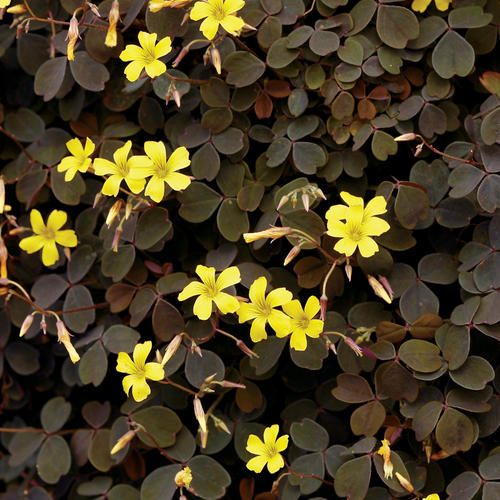
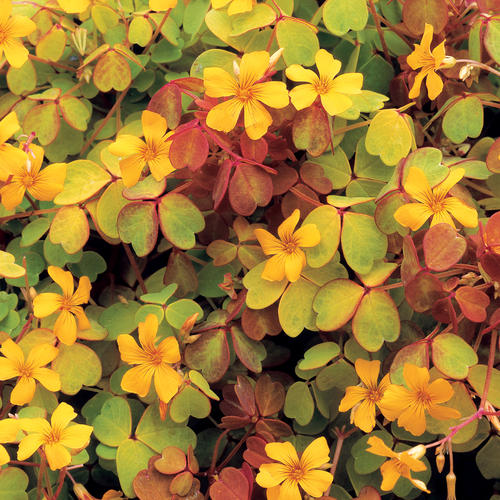
Photo Courtesy Proven Winners ‘Zinfandel’ Oxalis
Outdoor Splendor
As the temperatures rise and the sun bathes the earth in its golden glow, the Oxalis plant can make its debut outdoors. May through September Shamrock plants thrive in garden beds, rock gardens or in containers on patios and balconies.
Planting Oxalis outdoors invites a sense of whimsy and enchantment to your garden landscape. Its delicate foliage dances in the breeze white its dainty flowers bloom in shades of pink, white or yellow, attracting bees and butterflies to partake in its beauty.
Much like its indoor counterpart, caring for outdoor Oxalis is a breeze. Ensure it receives appropriate sunlight, well-draining soil, and regular watering, allowing it to flourish and spread its luck throughout your outdoor oasis.
Cultivating Joy with Shamrocks
Pick up a Shamrock plant this week to bring luck into your home! Enjoy its vibrant colors on your kitchen counter or in a window sill and then later when the weather warms transplant it into your landscape or into a mixed garden container! You will be sure to enjoy its resilient nature and effortless charm which will serve as a reminder to embrace life’s beauty.
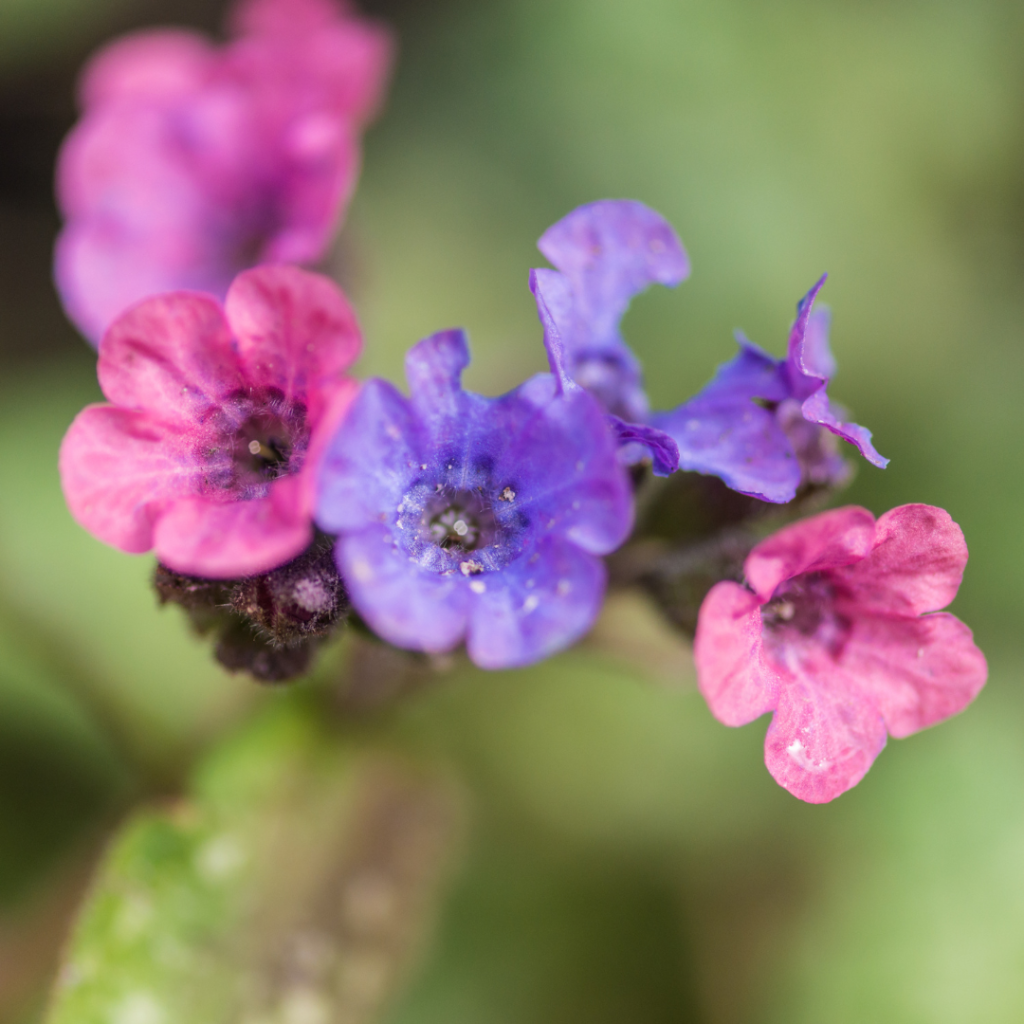
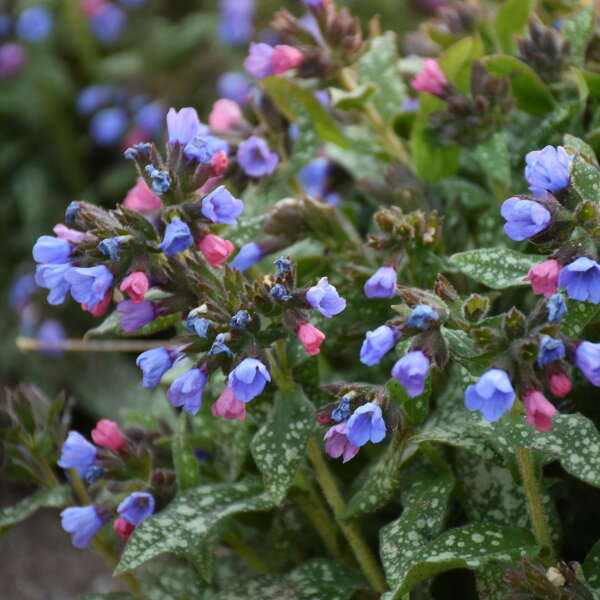
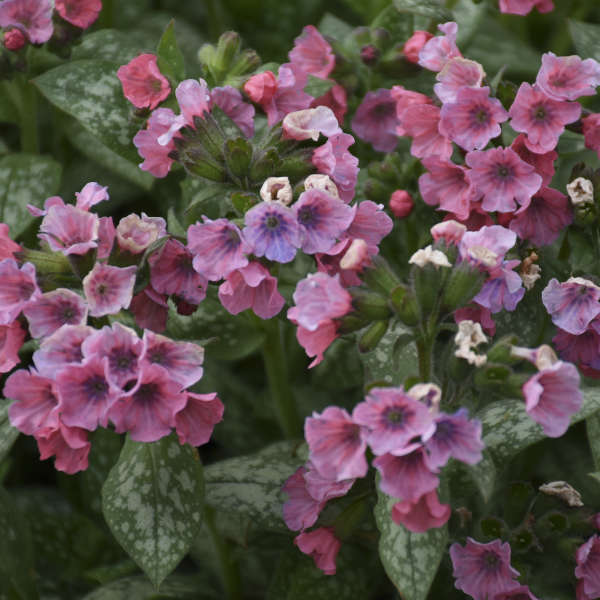
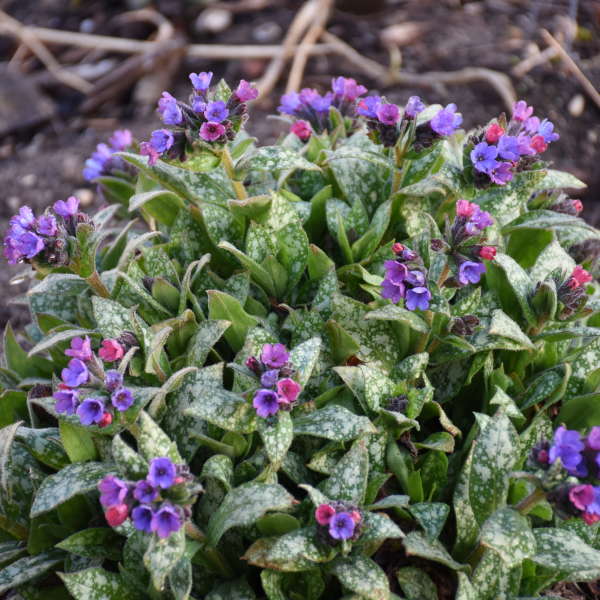
Lungwort also known by its Latin name Pulmonaria, is a captivating perennial that adds a touch of elegance to any garden. With its distinctive silver-spotted leaves and charming, tubular flowers, Pulmonaria is not only visually appealing but also a valuable asset to your garden’s ecosystem. An excellent bold-textured woodland perennial that contrasts nicely with other early perennials such as Hellebores or Bleeding Hearts. Its early blooming habit makes it an excellent nectar source for early bees and pollinators. This beautiful plant is sometimes also referred to as Bethlehem Sage or Our Lady’s Milk Drops.
Key Characteristics
Foliage: Pulmonaria plants are renowned for their unique fuzzy elongated leaves, often spotted or splashed with silver. The variegated foliage adds interest and texture to your garden, even when the plant is not in bloom.
Flowers: Lungwort blooms in early spring, showcasing clusters of tubular, bell-shaped flowers in shades of pink, blue, purple, and sometimes white. The two-toned blossoms create a stunning visual display and are a beacon for early pollinators, such as bees, butterflies and hummingbirds.
Adaptability: Pulmonaria is a versatile plant that can thrive in various conditions. Whether in partial shade or full shade, these hardy perennials are well-suited for woodland gardens, shaded borders, or as ground cover beneath trees.
Cultivating Tips
Location: Plant Lungwort in a location with dappled shade to partial shade. While they can tolerate some sunlight, they thrive in cooler, shadier spots. Pulmonarias spread slowly by creeping rhizomes, forming a nice patch of foliage.
Soil: Lungwort prefers well-draining, moist soil with a slightly acidic to neutral pH. Incorporate organic matter like Bumper Crop compost into the soil to enhance its fertility.
Planting: Plant Pulmonaria in the spring or fall, ensuring the crown is level with the soil surface. Space plants about 12 to 18 inches apart, giving them room to spread.
Watering: Keep the soil consistently moist, especially during dry periods. Mulching around the base of the plant helps retain moisture and suppress weeds
Maintenance: Deadhead spent flowers to encourage continuous blooming and remove any damaged or yellowing leaves. Pulmonaria can be divided every few years in the spring to rejuvenate the plant and control its size.
Lungwort is a low-maintenance plant that is deer and rabbit resistant but here are a few extra tips to ensure optimal growth!
Dry conditions can lead to powdery mildew and leaf scorch. If plants decline or are affected by powdery mildew, prune them back to ground level as well.
Clean up in the spring by removing old or damaged foliage from the previous year.
In our cold climate provide a layer of pine bark mulch at the base of the plant in late fall.
Embrace the allure of Pulmonaria in your garden, and you’ll be rewarded with a delightful display of color and texture. With its eye-catching foliage, early spring blossoms, and adaptability, Lungwort is a valuable addition to any garden, bringing beauty and biodiversity to your outdoor space.
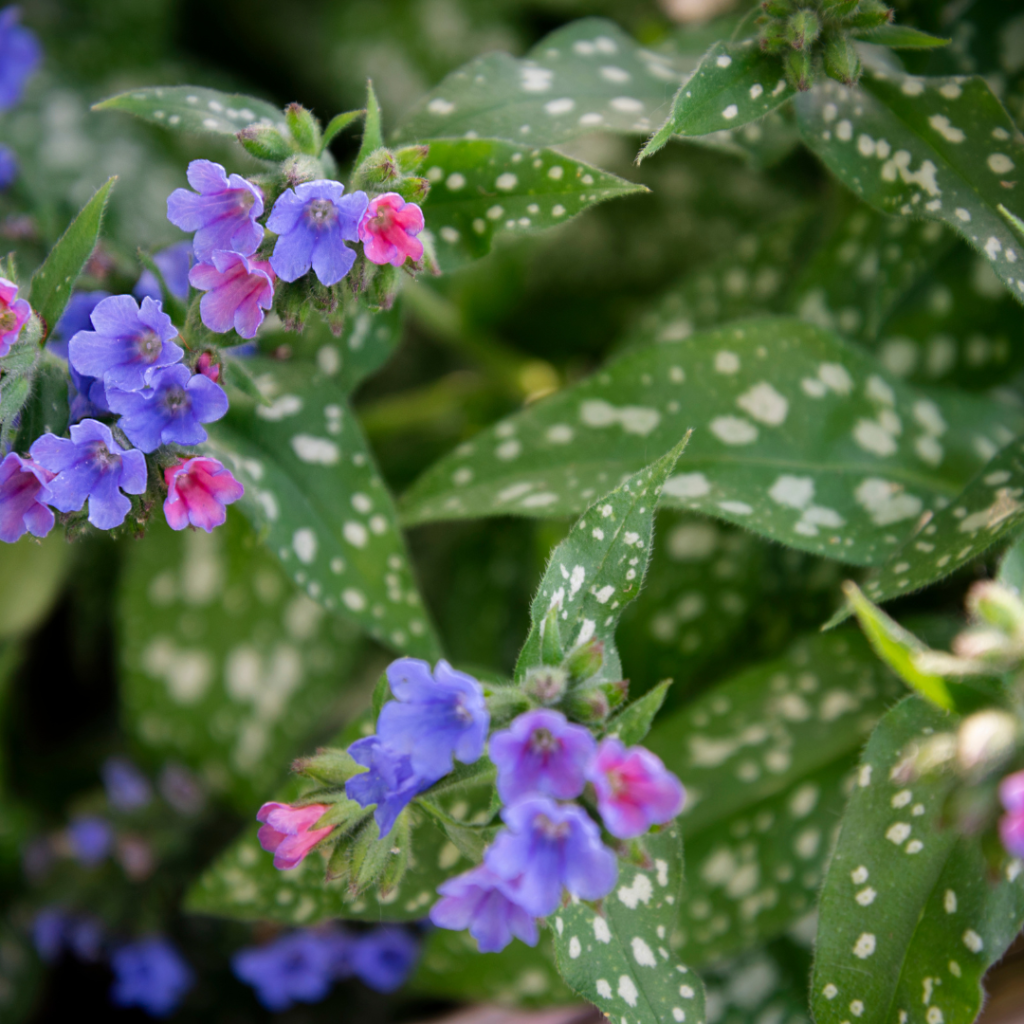
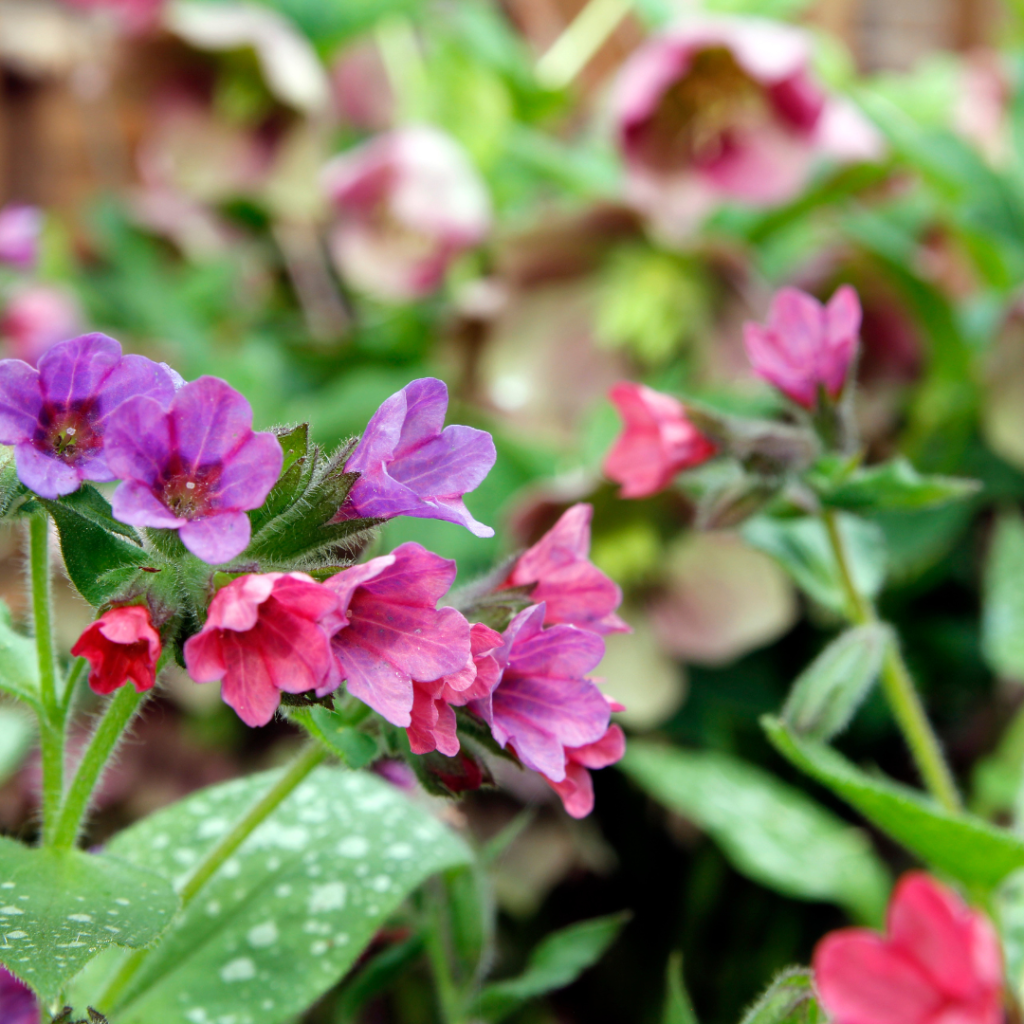
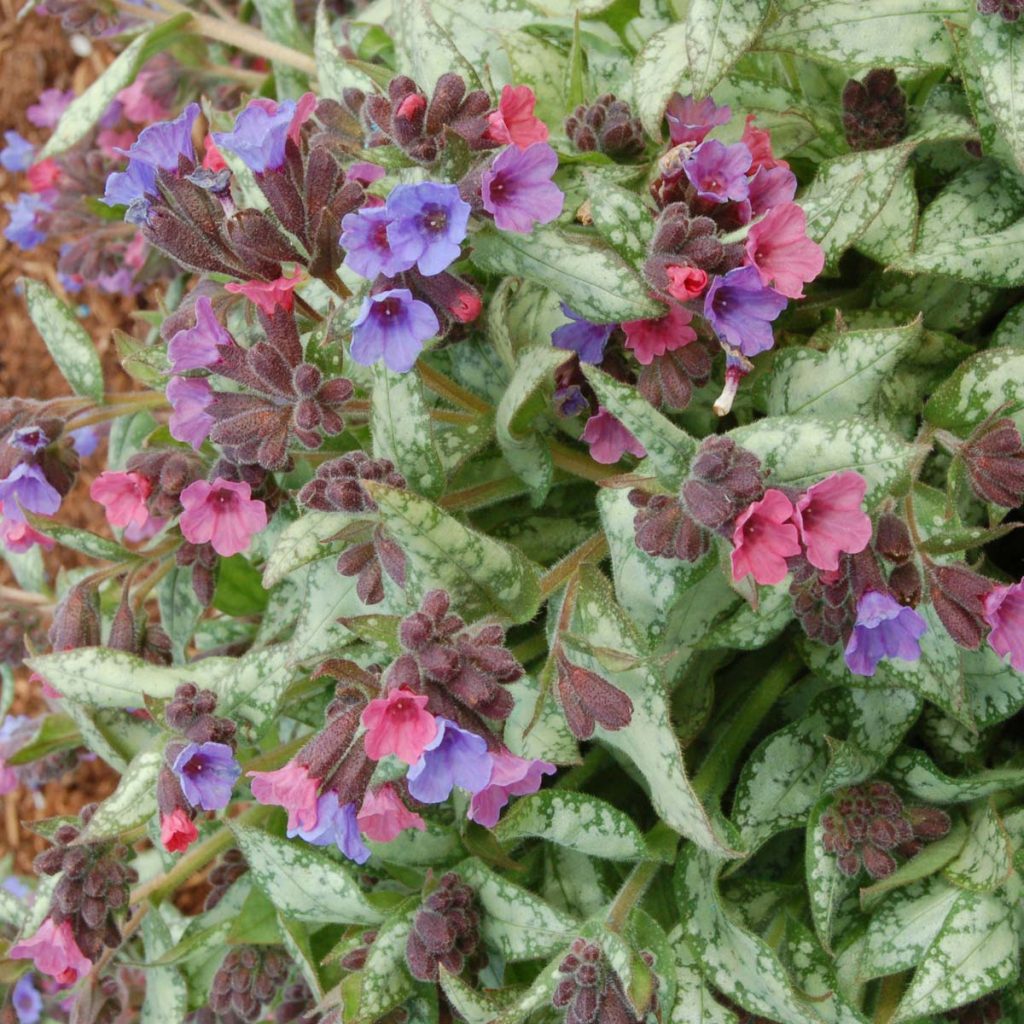
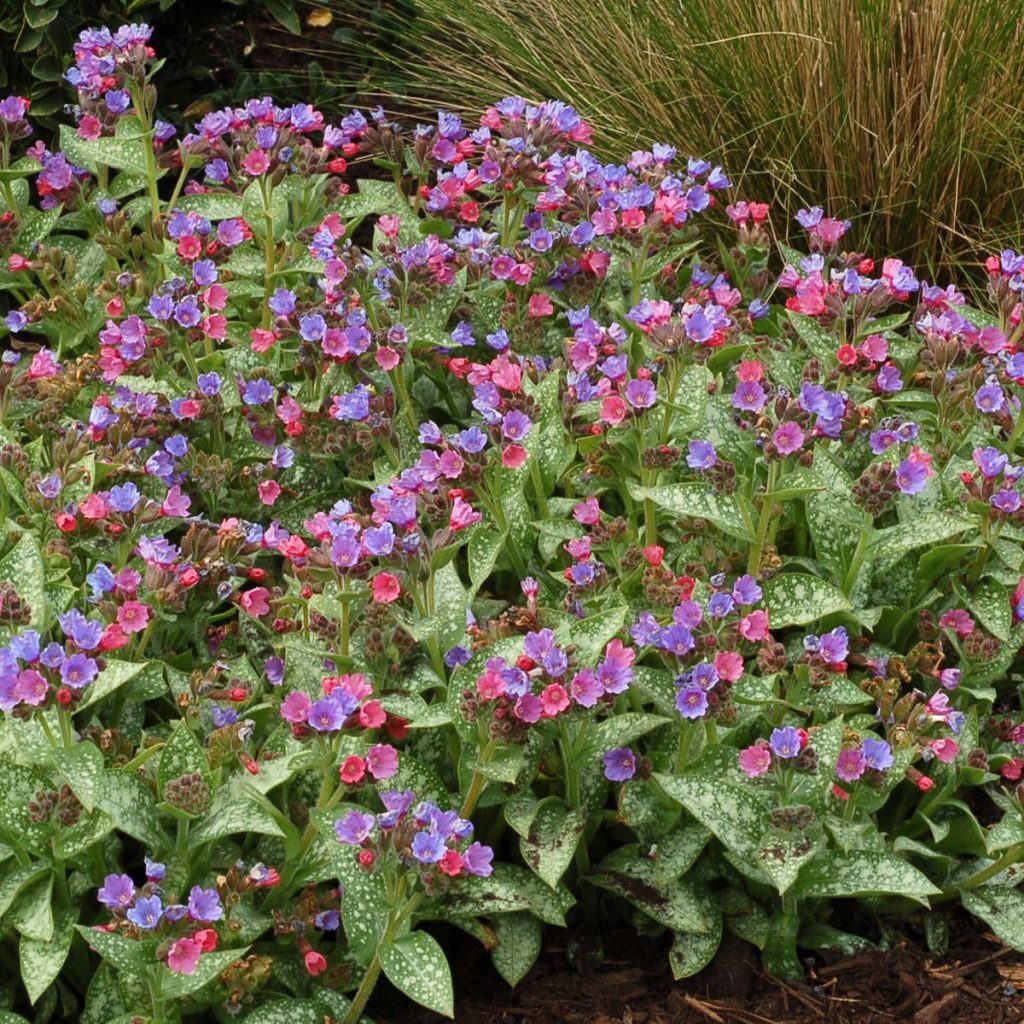
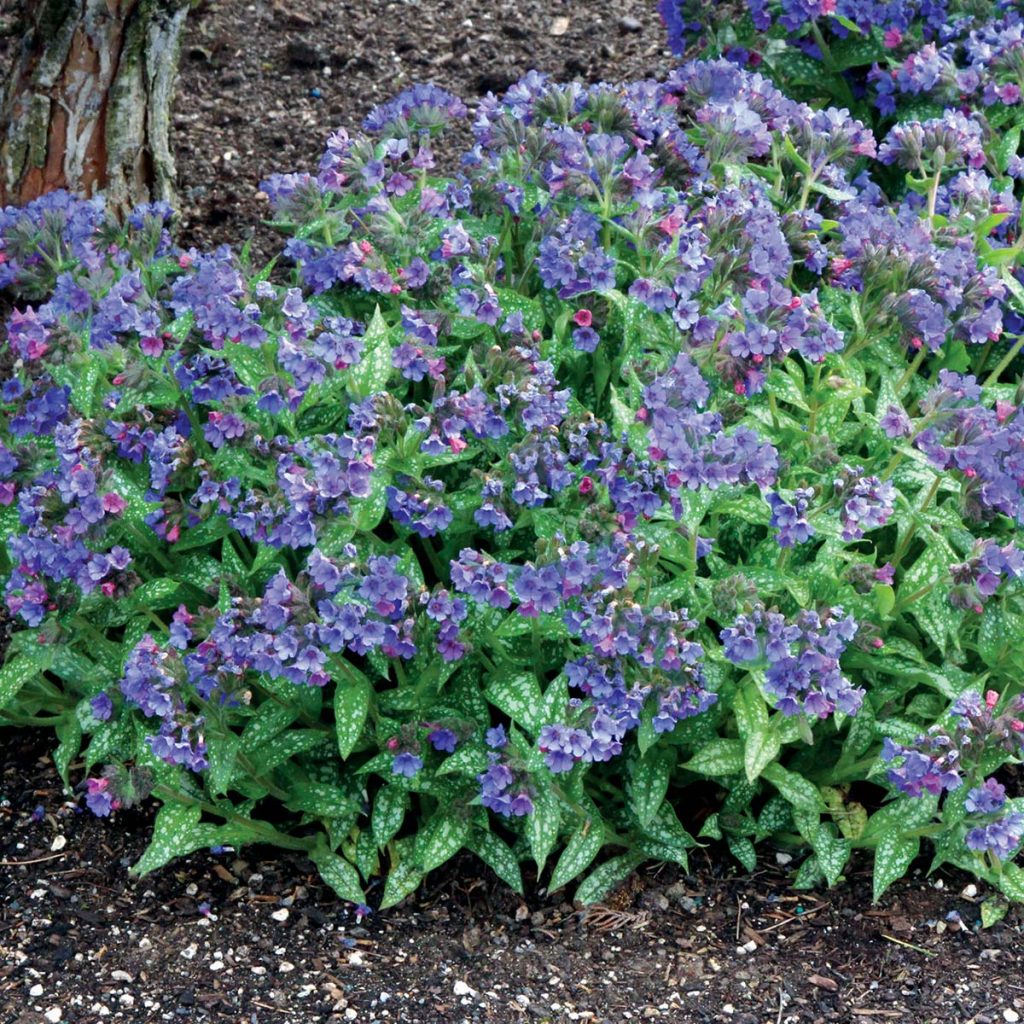
‘PINK-A-BLUE’ Photo courtsey of Walters Gardens inc.‘PRETTY IN PINK’ Photo courtsey of Walters Gardens inc.‘SPOT ON’ Photo courtsey of Walters Gardens inc.
Cultivars:
‘DARK VADER’ -is noted for its combination of dark, thick leaves with silver spotting and its compact habit with pink to dark blue flowers. 10” TALL 19” WIDE
‘SPOT ON’- flowers open a unique deep salmon pink that matures to a rich blue color. Silver speckling dusts the green leaves. This is one of the first Pulmonaria to have near-orange flower buds. 14-16” TALL 18-20” WIDE
‘PINK A BLUE’ -Pink flower buds open to medium blue flowers in early spring. Buds and blooms appear at the same time for an alluring two tone effect. Compared with ‘Spot On’, the flower buds are pink instead of salmon, the flowers open a lighter blue, and the foliage is dark as opposed to light green and narrower. 16-18” TALL 22-24” WIDE
‘PRETTY IN PINK’ – Large, bright rose-pink flowers stay consistently pink and are produced in large flower clusters over a low and wide habit. Dark green leaves are lightly to moderately speckled with silver. 14-16” TALL 24-28” WIDE
‘RASBERY SPLASH’- Brightest raspberry and deep purple blossoms on upright heavily spotted lance-like leaves. Chosen for its intense color, upright habit and profuse flowering. 12” TALL 18” WIDE
‘HIGH CONTRAST’ Photo Courtesy of Terra Nova Nurseries‘DARK VADER’ Photo Courtesy of Terra Nova Nurseries‘TREVI FOUNTAIN’ Photo Courtesy of Terra Nova Nurseries
‘HIGH CONTRAST’- Brilliantly contrasting foliage and one that can handle the dry heat! Large pink flowers fade to blue over mildew-resistant foliage. Nice mounding habit. The wavy, spear shaped leaves are dark green, infused with melting silver. 9” TALL 18” WIDE
‘TREVI FOUNTAIN’ -This superb, brightly silver-spotted beauty will give rise to profuse clusters of large cobalt-blue flowers in spring. A true dark-blue and grows into a magnificent landscape specimen.11” TALL 25” WIDE
‘OPAL’- features delicate clusters of sky-blue bell-shaped flowers at the ends of the stems from mid to late spring, which emerge from distinctive shell pink flower buds. Its attractive narrow leaves remain emerald green in color with distinctive silver spots throughout the season. 12” TALL 15” WIDE
Great Companion Plants
Astilbes
Bleeding hearts
Coral Bells
Foam Flowers
Ferns
Hellebores
Hosta
Frasier Fir Heritage Home Care
5 Tips Pros Use to keep their Greens Fresh
Tips for Keeping Greens Fresh
Pick up Greens early while the selection is great, so you can be sure to get exactly what you need for your displays.
Keep Greens in a Shady & Cool location until ready to display. (think north side of buildings)
Spray with WILT PRUF to prevent drying out! Wilt-Pruf® uses a unique Moisture Lock Formula™ that is natural, organic, and provides layers of protection to keep your greens bright and fresh.
Create fresh angled cuts on greens that will be going into pots, vases or centerpieces. (Keep them filled with water and change water out biweekly)
Misting greens that don’t have a water source will help prevent drying out. Mist up to 3 times a week or soak for 15 mins a week in a sink or bath tub.
Thanks for signing Up for our Houseplant Email Series




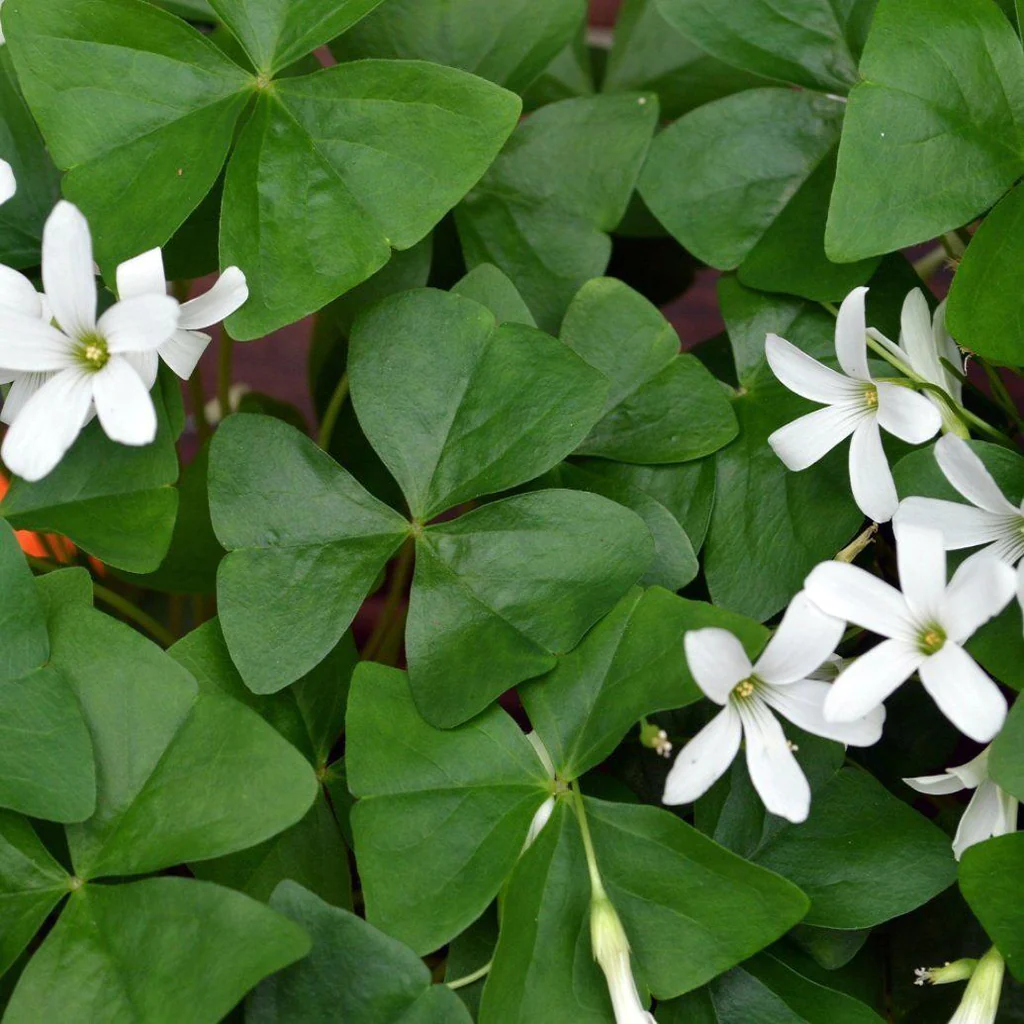 In the realm of houseplants, there exists a gem that not only graces our living spaces with its beauty but also symbolizes luck and prosperity. Meet the Shamrock Plant aka Oxalis plant, a delightful addition to any indoor oasis or outdoor garden, particularly thriving in warmer climates. Whether you’re a seasoned green thumb or just beginning your journey into the world of gardening, embracing the charm of Oxalis promises to fill your surroundings with boundless joy.