
Author Archives: D.R. Snell Nursery

How To Succeed At Seed-Starting

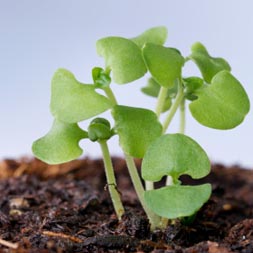
Seedlings can be purchased of course but, for a number of reasons, you may wish to start your own plants. By starting plants from seed, you have a much greater selection of flowers, vegetables and herbs to choose from. Old time favorites and less common varieties might not be available as plants but are readily available in seed. We offer an extensive selection including many hard-to-find, unusual, organic, non gmo and heirloom seed varieties.

CONTAINERS

Traditionally, seeds are started directly in flats or in peat pot and seed starting tray place into the flat. We carry a wide assortment of sizes and styles of these classic items as well as the ever popular Jiffy-7 wafer. When moistened, the Jiffy-7 expands to form a small, self-contained pot of soil into which seed is sown and, later, may be directly planted in the garden. This is an excellent choice for plants that do not like their roots disturbed during transplanting.

SOIL

It is best to use a light, soilless planting medium labeled as a “Seed Starting Mix”. These mixes are sterile and contain adequate nutrients to carry seedlings through until it’s time for transplanting. Never use garden soil, it is too heavy, causing poor germination, and may also introduce a fatal fungal disease called “damping off”.

SOWING

Seeds should be sown 2 to 10 weeks before the last spring frost date. Your seed packet will provide this information. Fill your containers to the top with moist growing medium. Tamp your container gently, but firmly, on the table top to remove air pockets.  Add more mix as needed to bring it the soil back to the top and smooth the surface flat. Larger seeds are generally planted deeper than small seed. Your seed packet will advise the planting depth. Gently press the seeds into the mix or simply set them on the surface of the soil and place milled sphagnum moss over the top to prevent damping off. Cover the flat with a clear humidity dome. Be sure to label your containers with plant markers and include the plant name and date sown.

TEMPERATURE

Many seeds require warm soil in order to germinate. You can accomplish this by using a heat mat, heat tray or heating cable. Flats may also be placed on top of the refrigerator or a hot water heater. Do not place seed-starting trays on a windowsill as early-season nighttime temperatures are frequently too cool to promote good germination. Once green is visible above the soil heating should cease.

MOISTURE

Seeds need to be kept constantly moist in order to germinate. Moisten the soil thoroughly before planting. Water again when the soil surface is dry. Watering from below is the best method. You may also water from above using  superfine nozzle or plastic spray bottle until the soil is saturated. The medium should stay constantly moist but not soggy. It is important not to overwater but also not to permit the flats to dry out. Once seedlings have grown a half-inch or so, you should water less frequently allowing the soil dry slightly between waterings. 

LIGHT

Seedlings will also need light and the best method is to use the traditional fluorescent fixtures or the new energy saving LEDs. Suspend lights just an inch or two away from the plants. Lights must be on at least 14 to 16 hours a day. As your seedlings grow, raise the lights accordingly. If your seedlings do not get enough light, they will become weak and spindly.

FERTILIZING

Fertilize seedlings weekly using a half-strength solution of a complete organic fertilizer. A fish and seaweed blend works well. Thin seedlings if they become overcrowded.

HARDENING OFF & PLANTING OUT

Seedlings may be moved outside after all danger of frost has passed. Move your trays outside gradually over a five to seven day period. Start by putting them out for a few hours, and then gradually increase the duration until they are left out all day and night. Keep them in a lightly shaded, protected spot during the day to prevent sunburn. Continue to monitor soil moisture and water as necessary. After you have “hardened off” your seedlings, gently transplant them into the garden. Try not to handle the root ball too much as they are quite fragile. Water thoroughly after transplanting and again every day for about a week. Newly set out plants will look sparse at first, but they are resilient and will grow and fill in quickly!
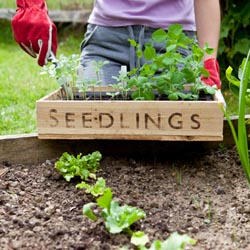
Gardener With Seedling Tray

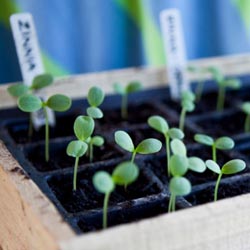
Seedling Box Tray in Greenhouse

seed_starting_3

Save

Healthy Soil, Healthy Plants

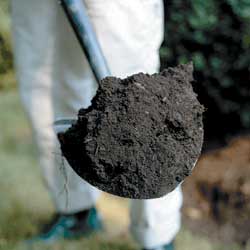
The key to successful gardening is “healthy soil.” Quite simply, when you feed the soil the proper nutrients, you let the soil feed the plants. So how do you “feed” the soil? First, you need to understand some basic principles about soil and why it is so important, then you can take steps to improve it.

To start, you should determine the soil texture by moistening the soil and rubbing it between your thumb and fingers to determine its “feel.” Sands are gritty and will barely hold together; clay can be squeezed into a firm shape; and silt will act in a way to allow particles to cling together. Sandy soils tend to dry out quickly because they contain high amounts of soil air. Oppositely, clay soils have a tendency to pack together, shutting out air and water. The best garden soil, “loam,” has moderate amounts of sand, silt and clay. Generally, soil in our area tends to be clayey. This condition can be improved by adding sufficient amounts of compost. For sandy soils, humus should be added to help retain moisture and nutrients.

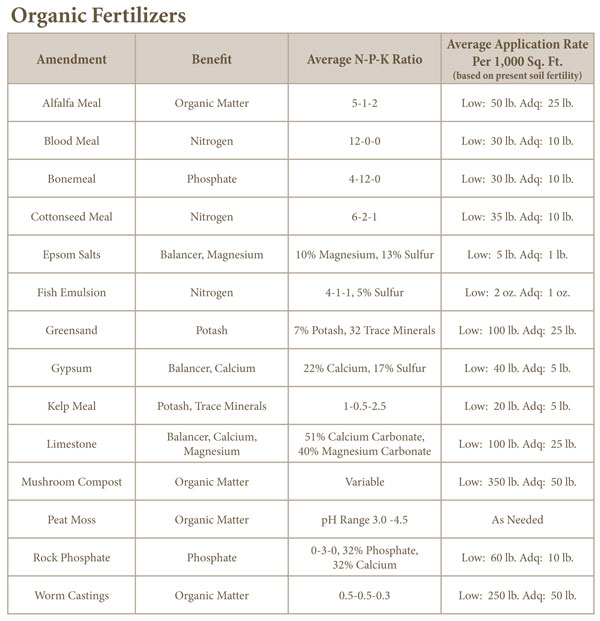
Next, you must evaluate the soil structure. Soil structure is affected by soil pH, the amount of humus and the combination of minerals in the soil. Ideal soils allow soil particles to clump together with air spaces between them for water drainage as well as oxygen consumption and carbon dioxide release from plant roots. The best way to improve soil structure is to add high amounts of organic matter like humus, dehydrated manure, composted manure, mushroom compost, alfalfa meal, peat moss, or worm castings.

You will also need to take a soil sample, to measure the pH and amounts of nitrogen, phosphorus and potassium in the soil as well as other nutrients. This will help determine exactly what the soil needs. Our staff will help you read the results and determine what to add to your soil and how much. Generally, a pH of 6.0 to 7.0 is acceptable. If your pH is lower than this, your soil is too acidic and requires lime to be added. If your soil is low in organic matter, it will often have a high pH level. All plants require a proper balance of nutrients – nitrogen (N), phosphorus (P) and potassium (K). Soils lacking any one of these elements will not produce healthy plants.

When dealing with poor, or improperly balanced soils, obtaining “healthy” soil may take two to five years to acquire. The best thing you can do to supplement your soil program is to use various organic fertilizers to meet your plants’ needs and regularly add organic matter. This will continue to help the soil structure as well as create biological activity that is also a vital part to developing productive soil.

fertilizer_chart

healthy_1healthy_2

Butterfly Bush

What could be more enjoyable than relaxing in your favorite lawn chair or hammock, your sunglasses on and a cool beverage in hand, staring at an enchanting array of colorful butterflies milling around their favorite plant? What could possibly be an easier way to accomplish this vision than by planting a simple butterfly bush?

About Butterfly Bush

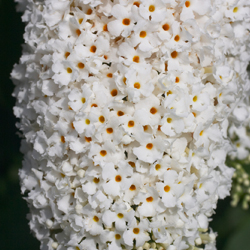
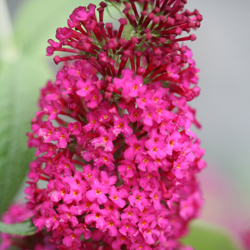
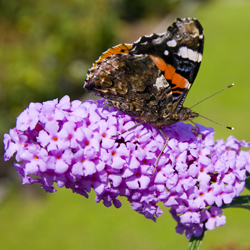
Buddleia davidii, the butterfly bush, is a flowering maniac. It pushes its proliferation of perfumed blooms straight through summer and well into fall, providing nourishment to butterflies all season long. Available in a multitude of colors ranging from white to pink to red to purple, there are colorful butterfly bushes to match any garden or landscape color scheme. The fragrant, long, spiked panicles are borne in profusion on long, gracefully arching branches that add drama and elegance to the yard. And it really is a butterfly magnet!

Growing Butterfly Bush

This quick growing, deciduous, woody shrub is winter hardy in zones 5-10. In the northernmost areas of its hardiness range, Buddleia behaves like a herbaceous perennial, dying back to the ground in very cold winters. In the southernmost areas, Buddleia is grown as large shrub and can flourish all year. In either location, however, you should treat this plant as a cut back shrub. Because butterfly bush blooms on new wood, it benefits the plant to be cut back to the ground each spring. This judicious pruning will stimulate lavish new growth and an abundance of flowers. It will also keep some of the larger varieties at a manageable size, particularly in smaller yards, corners or other confined spaces.

Plant your butterfly bush in full sun in just about any type of soil and it will thrive. Don’t worry about fertilizing as over-fertilization can encourage too much leaf growth over flower formation. Deadheading will encourage additional growth and new flower buds to extend the blooming season. Buddleia has a good tolerance for drought once established, but should be carefully watered when young. A good, thick layer of mulch will help maintain soil moisture and keep weeds down to keep the shrub healthy. Just be sure not to use insecticides or pesticides on your butterfly bush or you may be harming the very fluttering fliers you hope to attract.

Not sure which butterfly bush to try? Consider these varieties to choose the perfect color and style to suit your yard.

Recommended Buddleia Varieties

The “Miss” Series are all non-invasive, and get to be about 4 foot tall

‘Miss Molly’ – Intense almost red flower

‘Miss Ruby’ – Brilliant rich pink flower

‘Miss Violet’-  Perfectly Purple blooms

The Pugster Series have full size flowers on dwarf plants that only get 2 foot tall

‘Pugster Blue’ a nice true blue flower

‘Pugster pink’ a light pink bloom

‘Pugster Amethyst’ a amethyst toned flower


Watering When Away

It’s vacation time! You’re going to be gone for two weeks or more, your friends, neighbors and family members are all busy and the weatherman says it’s going to be “hot, hot, hot.” What about your houseplants?

Fear not! A few minutes of thoughtful planning and a quick trip to the garden center will ensure meeting your plants’ watering requirements even when you can’t be home for daily moisture checks. Popular and effective solutions include…

  • Pre-Watering: Before you leave on your trip, make sure your plants are well-watered. Many houseplants can withstand some watering neglect, and if you aren’t gone too long, they may not need any supplemental solutions if you’re watered them right before your trip. Take care not to overwater, however, or you could be compounding the problem.
  • Anti-Drought Solution: Prior to leaving, water with an anti-drought solution. It temporarily forces the plant into dormancy. This reduces the water requirement for roughly two weeks (effective control will vary by product and plant type) while the solution gradually wears off. This can affect blooming or growth periods, however, so read instructions carefully and use the solution exactly as directed.
  • Self-Watering Containers: Planting your houseplants in self-watering pots is truly looking ahead. A reservoir holds water under the pot, and this water gradually travels to the soil via a wick, always keeping the soil moist so long as the reservoir contains water. If you want to use a specific pot without a built-in reservoir, use a conversion kit. Various sizes are available and some use fill tubes. Consider adding liquid fertilizer to the reservoir water to ensure your plant gets proper nutrition while you are away.
  • Individual Pot Drippers: These generally hold water above the plant. Various sizes and styles provide water to small and large pots. From beautiful blown glass globes to simple plastic bottles, these allow water to drip down into the soil through a drip-tip inserted in the soil. One style even looks like a flask attached to the side of the pot with a tube dripping water to the soil. Because they show above the plant, many people only use them during their vacation.
  • Automatic Watering Systems: These are more elaborate but very effective options. A large water reservoir feeds to clustered houseplants through small tubing attached to drippers inserted in the soil. Larger pots use two or more drippers. These systems pump water on a regular basis using a battery and timer, making them ideal for regular watering when you may be taking a longer trip. These also allow liquid fertilizer in the reservoir so your plants are properly nourished.

Go ahead and enjoy your trip…your plants should be fine!

The N-P-K of Fertilizer

Once upon a time, Mary, Mary, Quite Contrary grew her garden with silver bells and cockleshells, but nowadays, most gardeners use some other forms of fertilizer that are better formulated than nursery rhymes. But what important components make up a fertilizer, and why are those components important for your plants?

Understanding Fertilizer

Simply put, a fertilizer has nutrients to make a plant grow better. Years ago, farmers used composted manure, ashes and urine. Today, most of us buy our fertilizer, but a trip to the store can be confusing. What do those numbers on the fertilizer bag mean? Should I buy liquid or granular? Which is better, slow or quick release? Let’s investigate…

Without getting too technical, the three numbers show the percentage of available nitrogen (N), phosphate (P) and potassium (K) in a fertilizer blend. By law, it always goes in that order. If you see a fertilizer with 20-5-10, it means the fertilizer contains 20 percent available nitrogen, 5 percent phosphate and 10 percent potassium. Other nutrients and filler make up the difference and are often chosen for specific types of plants, such as roses or flowers, vegetables, trees, etc.

What does that mean to your plants?

  • Nitrogen promotes chlorophyll, producing greener, more quickly growing plants. If your plants aren’t as green as they should be, use a fertilizer with nitrogen. Most lawn fertilizers have a relatively high nitrogen content and cause mowing to be more frequent as lawns “green up” and grass blades grow more quickly.
  • Phosphate improves root growth, flowering ability and bloom size. Use a fertilizer with a larger middle number (phosphate percentage) to encourage root growth during transplanting or to encourage blooms. This is especially important when initially planting so root systems become strongly established.
  • Potassium enables the photosynthesis process and improves plant resistance to cold spells, drought and insect attacks. Many people use a potassium fertilizer when the seasons change to help plants resist the stresses of those transitions.

Liquid or Granular? Fast or Slow?

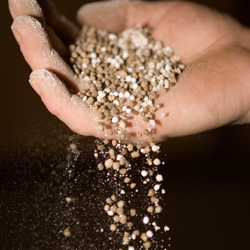
Fertilizers come in liquid and granular forms. Generally speaking, liquids are highly concentrated and need to be mixed with water before being fed to plants, but they are absorbed more quickly and are easy to apply more evenly. Granular formulas have small beads or grains that must be spread around and watered into the soil, and it can be difficult to spread an even layer over large areas unless a spreader is used. Granular forms need time to dissolve or decompose before they can be absorbed, but they last longer in the soil and can nourish plants for weeks or months.

Similarly, fertilizers come in fast or quick release forms as well as slow release forms. Both can work well in any garden, depending on your fertilizing needs, plant nutritional requirements and condition of your soil.

Read the label carefully for specific instructions and uses. It may seem boring, but reading that label will prevent bad results, as overuse or misuse of fertilizer can kill your plants, upset the balance of your soil and even cause environmental contamination – not the results you planned. Once you know more about fertilizer and how to use it correctly, however, you’ll enjoy the results this extra treat can give to your garden.

Summer Lavenders

Do you enjoy making herbal or floral bouquets and wands to scent the house? Maybe you’re into the lavender cooking trend or like to infuse playful summer drinks with a floral touch. Perhaps you recognize the aromatherapy or medicinal qualities of lavender.

In other words, do you love lavender and are frustrated because the bloom season is so short?

Whatever you do with your lavender, you may have planted one and it bloomed for a few weeks. Now you think you have to wait another year to enjoy the beauty and fragrance. That’s no fun! But here’s a secret to prolong your passion during lavender season…

About Lavenders

There are actually three groups of lavenders. Members of each group bloom around the same length of time, but each group blooms at different times. By planting at least one member of each group, you can enjoy lavender from early spring to mid-summer (and sometimes even longer with careful watering).

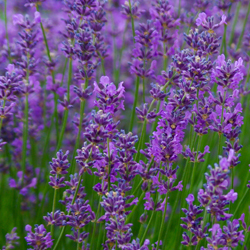
Members of the “Non-English Lavenders” bloom from early to late spring. “English Lavenders” follow and bloom from late spring to early summer. True summer lavenders, known as “Lavendins,” continue blooming into the hottest days of summer.

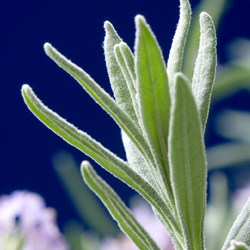
Also called “English Lavender hybrids,” the varieties in this summer group are crosses between the Portuguese and English Lavenders. They all have large gray leaves, grow into large plants, and grow best in the heat. They are all very fragrant, making them welcome additions to any lavender garden.

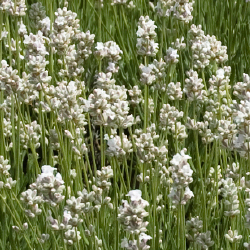
Abriali Lavender was one of the first hybrids. It produced cosmetic-grade oil until Grosso Lavender replaced it with superior oil production. Happily, gardeners can also enjoy Grosso in their gardens, as it’s frequently available at garden centers.

White Grosso Lavender, with the same beauty and fragrance, provides a nice background for a mixed flower border. Edelweiss Lavender, a smaller white lavender, mixes nicely in the garden, without a reduction of fragrance.

Hidcote Giant Lavender and Provence Lavender are garden center favorites. Approximately the same size, the Hidcote Giant has darker flowers than the Provence, which has a longer flower wand. Sachets usually contain Provance buds because they are exceptionally easy to remove from the stalk. Other popular varieties include Grappenhall, Dutch Mill, Seal and Fred Boutin lavenders.

Lavenders In the Garden

Growing lavenders could not be easier. All thrive in full sun in warm, well-drained, average quality soil. Dampness, either through poor drainage or humidity, will kill them. They grow well in pots with good drainage and fair soil. Prune after blooming to shape the plants and promote future blooming. While lavender is drought resistant, if the soil is dry, it is necessary to water well. Water again only when the soil is dry. Using compost as fertilizer will provide critical nutrients and improve soil drainage.

Using Lavender

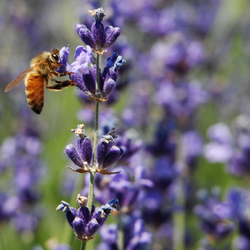
Lavenders are very attractive to bees. They happily buzz from flower to flower while collecting pollen. Some honey producers site their hives in the middle of lavender fields to produce lavender-scented honey. The honey’s aroma is a great way to start the day!

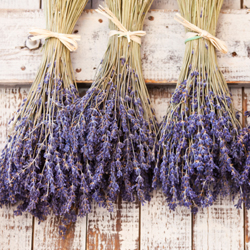
Drying lavender for future use is easy. Cut bundles of wands from the plants without cutting into the older woody part of the plant. Use a rubber band to hold the bundles together and hang them upside down in a dark, dry room such as an attic or closet. The darkness helps retain the bloom color. The bundle should be dry in 7-10 days.

Although lavender’s taste isn’t the same as its fragrance, lavender dishes appear in many trendy restaurants. Lavender martinis and teas, ice cream, cookies and other desserts accompany lavender-sauced meats and vegetarian dishes. Lavender is an ingredient in the herbs de Provence mix and replaces strong tasting herbs such as rosemary, thyme or mint in many cookbooks for meats, breads and general seasonings.

Some folks even use lavender as an antibacterial antiseptic to treat wounds and insect stings.

Even if you just want to enjoy lavender for the sake of its beauty and ease of maintenance, remember… Planting one of each of the three groups lets you love your lavender for three times as long. Enjoy!

Raising Root Crops

Root crops are among the easiest vegetables to grow, and often the first and last vegetables in the garden to mature. Your garden may produce enough vegetables to take you through the entire year and, if kept correctly, root crops will last a long time in storage. These vegetables are great to grow, even in a small space. Many root crops are frost tolerant and with most, the tops, or greens, are also edible.

What Root Crops Need

To get the best harvest of root crops, no matter which types you opt to add to your garden, you need to meet their cultivation needs.

  • Soil
    Root crops grow best in deep, loose, rock-free soil that will allow the roots to form and grow easily. To nourish the plants, supplement the soil with plenty of organic matter.
  • Fertilization
    Root crops require a high phosphorus fertilizer for optimum growth, but check the needs of individual crop types to choose the best mixture. Always apply fertilizer according to the proper directions to prevent burning.
  • Temperature
    Most root crops are considered cool season vegetables and are planted both early and late in the growing season. Warm days and cool nights are most beneficial for root expansion.
  • Light
    Full sun is best.
  • Planting
    Seeds should be sown 2-3 weeks before the last expected frost date and subsequent plantings made every three weeks thereafter as weather permits (some exceptions apply). Planting depth varies depending on the type of plant; follow the directions on the seed packet. After seedlings emerge, thin to desired spacing as determined by the diameter of the root at harvest time. Beet and turnip tops that are thinned are edible raw as salad greens or they may be cooked. Root crops are generally not transplantable because they have a tap root.
  • Mulch
    Mulch plants that have already been thinned with salt marsh hay to retain soil moisture and minimize weed growth.
  • Pest Control
    Maintaining appropriate cultivation requirements will reduce or eliminate the need for pest control. As with all vegetables, it is important to rotate crops each year. Rotating root crops will discourage root weevils.
  • Basic Storage
    All root crops may be stored for a time before being eaten. In general, store at 32 degrees Fahrenheit and 95 percent humidity. Leave the crops in the garden as long as weather permits, then dig. Store the harvest in a root cellar or refrigerator.

Tips for Favorite Root Vegetables

  • Carrots – Plant in sandy soil if you want the classic, long, narrow type.
  • Beets – You may harvest 1/3 of the tops without affecting the root.
  • Garlic – grows best in well drained, but moisture-retentive soil.
  • Horseradish – Use caution when planting this aggressive perennial.
  • Kohlrabi – Has a mild, sweet cabbage flavor.
  • Leeks – Flavor is best if harvested after a light frost.
  • Onions & Shallots – Plant from seed or sets.
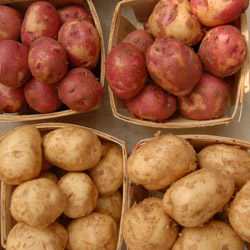
  • Potatoes – Best planted from ‘seed potatoes’ to match variety.
  • Radishes – Mature in as little as three weeks.
  • Sweet Potatoes – Warm weather root crop, will not withstand a frost.
  • Turnips – For a fall crop, sow seeds in midsummer.

raising-root-1

raising-root-2

raising-root-3

Begonias for the Home

Begonias are a beautiful and diverse group of plants, with more than 1,500 species. Some are suitable for use as bedding plants or in container gardens, some for hanging baskets and others for indoor cultivation. Begonias are treasured not only for their colorful flowers but also for their unique foliage, and many varieties make spectacular houseplants. 

Indoor Begonia Care 

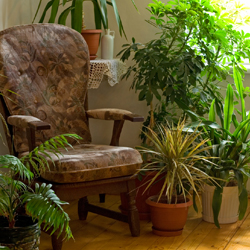
Begonias require little care when grown indoors. They need plenty of bright light with shading from the intense afternoon sun. Comfortable indoor temperatures are advisable, 65-75 degrees Fahrenheit, and should drop slightly at night, but not below 55 degrees Fahrenheit. Begonias are very sensitive to over watering. Make certain that the soil drains well, the pot has a drainage hole and water is not permitted to stand in the saucer. It is beneficial to provide additional humidity as heating and air conditioning rob indoor air of precious moisture. The best way to increase humidity is to use a humidity tray under your begonias. Avoid misting these plants to prevent mildew on leaves. Provide adequate air circulation to ensure the foliage stays fresh without excessive dampness. 

Indoor begonias are relatively carefree if they are kept healthy. Insects that commonly affect indoor plants may also cause problems for begonias. These include mealybug, whitefly and spider mites. If leaves become crispy around the edges it is an indication that the plant requires more humidity. If the leaves yellow and start to fall off it means the plant is receiving too much water. Fertilize begonias bi-weekly with a balanced fertilizer during the growing season. Stop fertilizing during the winter months to give the plant a rest.

 If you have any questions about these or any other houseplant problems, please call or stop by our greenhouse and speak with one of our experts. 

Best Begonias for Indoor Cultivation 

  • Angel Wing Begonias
    These begonias are favored for their large, colorful, patterned, wing-shaped leaves. The flowers of this begonia are large, hang in clusters and tend to be soft in color. Angel Wings bloom in shades of white, pink, red and orange. Due to their cascading habit, these plants lend themselves well to hanging baskets but also look wonderful in larger pots. You may pinch Angel Wing Begonias to keep them at a manageable size and also to promote new canes at the base of the plant. Hang these plants outside in a semi-shaded area during the summer.
  • Rex Begonias
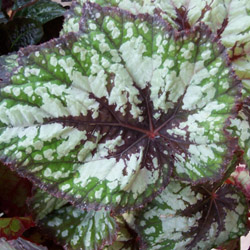
    Although these begonias do flower, rex begonias are grown primarily for their striking foliage. The leaves are uniquely shaped, unusually patterned, heavily textured and come in exceptional color combinations that can include green, pink, red, silver, yellow, orange, maroon and purple.
  • Rieger Begonias
    These are one of the most loved and easy to care for houseplants. The main attraction of this plant is the brilliantly colored, double or semi-double flowers in white, yellow, orange, pink and red. This plant will flower for several months and the flowers will last longer if temperatures are on the cooler side, 55-65 degrees Fahrenheit. Deadhead to encourage new blooms and extend the blooming season.
begonia-2

Rex Begonia

begonia-3

Green Gardening

Planting a vegetable or flower garden seems like the perfect thing to do when you are looking for ways to adopt a greener, more environmentally-friendly lifestyle. Some traditional gardening practices, however, may not be quite as “green” as you might think. Planning your gardens with the environment in mind and choosing some practices that maintain healthy ecosystems can help you create a truly “green” garden. 

Tips for a Green Garden 

There are easy, effective steps you can take in your garden to go green, including… 

  • Plant local and native species of trees and shrubs which are naturally adapted to the conditions in your area, thus requiring less watering and having natural defenses for local insect pests and plant diseases.
  • Collect rainwater for watering your container gardens and new transplants, and adjust your irrigation schedule to compensate for whenever Mother Nature does the watering for you.
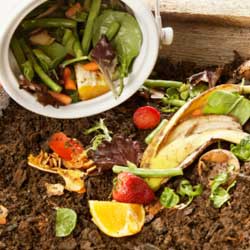
  • Use organic compost and mulch to improve soil health and reduce the need for pesticides and fertilizers. Better yet, make your own compost so you can adjust it to exactly what your plants need while keeping more waste out of landfills.
  • Opt for disease-resistant and pest-resistant plants rather than trying to force plants into an unfriendly area where they will need chemical assistance and extra maintenance to thrive.
  • Try to use natural products instead of chemical fertilizers and pesticides. Use traps, parasites and natural predators such as ladybugs and lacewings. Plants that repel insects – basil, chives, mint, marigolds or mums – mixed in with other plants can help keep pests away.
  • Choose wildlife-friendly plants such as flowerbeds that will attract hummingbirds, butterflies, bees and other pollinators, and don’t be upset to share some of your garden space with other critters.

These are just a few of the simple changes you can make in your gardening practices that will benefit the environment.

Green Products 

More and more “green” products are readily available to help you maintain the natural health of your garden. Before using a product, however, be sure it is suitable for your situation, and follow all application and use instructions. Even organic or eco-friendly products can become toxic contaminants if they are improperly used.

Popular options for green gardening products include… 

  • Dr. Earth contains probiotic beneficial soil microbes, plus ecto- and endo- mycorrhizae which feed the fiber of the living soil by releasing natural organic matter. People and pet safe.
  • Dr. Earth pest controls are organic controls for all of your pest problems, including all types of unwanted or troublesome insects. People and pet safe.
  • Espoma Organic Traditions line of products includes bone meal, kelp meal, garden sulphur, potash and garden lime for helping to improve your soil without artificial chemical compounds.
  • Bonide offers organic fertilizers as well as organic formulas for pest and plant disease control, such as fruit tree sprays.
  • Scotts Organic Choice lawn care products provide more environmentally friendly choices for your yard.

Developing “green” gardening practices benefits you and your family, your garden, your native plants and animals, your water supply – our world, all of us.

SONY DSC

Growing Grass in the Shade

Cool season turf grasses prefer to grow in the sun. To establish a thick, healthy lawn of Kentucky bluegrass and perennial rye, you will need at least six hours of full sun daily. Fine and tall fescues are more shade-tolerant and require a minimum of four hours of full or eight hours of filtered sun a day. When plants do not receive enough sun, they cannot manufacture food (photosynthesis) effectively to support growth. As a result, plants that do not receive adequate sun are less heat- and cold-tolerant and more susceptible to disease and insect damage. When it is a tree or shrub that is causing the shade, there is also competition for soil nutrients and water. 

What does this mean for those of us with less than optimal light on our lawns? If it is grass that you wish to grow, it is not impossible, but you will have to settle for thinner turf. It doesn’t have to be any less healthy or hardy, however. Your chances of maintaining a healthy, thin lawn in a shady area is increased when adopting the following guidelines: 

  • Increase the amount of light and air circulation, if possible, by thinning tree canopies or removing the trees altogether.
  • Test your soil pH. It should read between 6.0-6.5 for growing fine fescue grasses.
  • If drainage is poor, improve it. Most turf grasses prefer well-drained soil.
  • Use a shady grass seed mixture with a high percentage of fine fescue grasses.
  • Do not sod. Most sod on the market is Kentucky bluegrass, which requires full sun.
  • Sow seed in late August to avoid heat and drought stress, weed competition and suffocation from falling leaves. Early spring is the second best time to seed.
  • During periods of drought, provide deep soakings to encourage a deep root system. Water early in the day to allow leaf blades a chance to dry and therefore reducing the possibility of disease.
  • Mow grass high, 3-4 inches. More leaf surface is required to increase photosynthesis in the shade.
  • Limit foot traffic in shady areas. This grass is already growing under stressful conditions and high use will contribute to its decline.
  • Fescue requires less nitrogen than other grasses. You may allow the grass clippings to stay in place. As they break down they will provide nitrogen to the soil. A spring and fall application of a high phosphorus fertilizer should also be used.

It is highly unlikely that you will have success when attempting to grow lawn in deep or heavy shade. The one exception is Poa trivialis, commonly known as rough bluegrass. This type of lawn is very shade-tolerant, but must have consistently moist soil. Without both heavy shade and constant moisture, you will not be able to grow a rough bluegrass lawn. 

Turf Alternatives 

Alternatives to turf in a shady area include: 

  • Shade-Tolerant Evergreen Ground Covers

Though not quite the same as grass, these groundcovers provide a green landscape without needing plentiful sunlight. They can also be lower maintenance and don’t require mowing. Selections include common periwinkle, pachysandra, purple wintercreeper, English ivy and lilyturf.

  • Perennial / Annual Shade Garden

Why not remove turf entirely in favor of other shade-loving plants? There are plenty of stunning perennials and annuals that don’t mind a bit of darkness. Visit our garden center and speak with our knowledgeable staff. We have an extensive selection of shade plants available and can help you make choices that will best suit your landscape conditions.

  • Mulch

Mulch is an excellent turf alternative for shady areas especially under a shallow-rooted tree where it can be difficult to grow anything. Mulch can also help you define paths to walk through the shade garden and will prevent mud from becoming a problem on those paths. You can opt for wood nuggets, shredded bark, gravel, river rock or even artificial mulches in a variety of colors. 

It can be a challenge to grow grass in the shade, but if you choose the proper type of grass and care for it well, you can cultivate shade-loving turf. If you’d rather not fuss with it, there are plenty of amazing alternatives that can make even the darkest corner of your landscape shine more brightly.

dining table with parasol