
Author Archives: D.R. Snell Nursery

Putting on Airs: Tillandsias

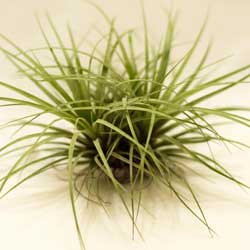
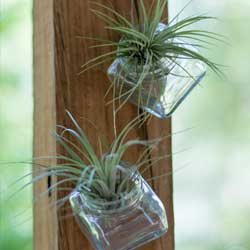
Looking for something easy to grow? The air plant, Tillandsia, should be on the top of your list. Tillandsia is the largest genus in the Bromeliad family with over 550 species that vary in color, size, texture and shape. In its native habitat, it will attach itself to trees and rocks using its roots. The air plant derives the nutrients and water they need from the air, hence its common name. And guess what? No soil is necessary! This versatile houseplant is not fussy, and when given minimal care, will adapt to most home and office environments.

Light

Place your Tillandsia where it will receive plenty of light but not direct sunlight. Direct sun will dry out the leaves very quickly. Home or office fluorescent lighting works just fine.

Temperature

50 – 90 degrees Fahrenheit

Water

Once a month, soak your air plant in water for about 20 minutes. If the plant is flowering, a delicate rinse would be more appropriate so that the bloom is not damaged. When through soaking, shake off the excess water from the plant and place in an area with good air circulation. In between soaks, spritz it once a week with clean water from a spray bottle. Indoor heat and air conditioning rob moisture from the air. If the leaves of your air plant start to wrinkle or roll, this is a sign of dehydration. If this happens, give the plant a good soak and spritz it more than once a week.

General Maintenance

It is not unusual for the outer leaves of the air plant to dry out and turn brown, simply remove them. If leaf tips dry a bit and turns brown, cut the tip off and continue with regular care. The plant will grow and look just fine.

One final note, Tillandsias have beautiful brilliant blooms but only bloom once in their lifetime. Depending on the species, the bloom may last several days to several months.

Easy, right?

tillandsias_2tillandsias_1

Trackable Tools

It’s the beginning of a new gardening season. Hopefully you took out last year’s journal in January or February and reviewed your notes on what you wanted to change, improve, experiment with or eliminate from your garden and landscape. Now is the time to begin implementing some of those great ideas, and it starts with having the right tools.

Where Do Your Tools Go?

One common problem in the garden is misplaced tools. We’ve all found hand tools in the spring that were inadvertently thrown in the compost pile or left under a shrub during fall cleanup. Many of us have spent time we didn’t have to spare walking in circles, looking for the shovel that we just had in our hand. It was laid down for a moment and seemed to disappear. Tools can easily disappear on a crowded workbench or in a cluttered shed, or they may even end up in a brush pile or other unlikely location.

When tools are lost, not only are our gardening chores impacted, but the tools can be damaged by exposure or accidental damage if they’re dropped, run over with a mower or otherwise subjected to inadvertent abuse. This can mean we no longer have the tool we need when we need it most, and we have to make a trip to the garden center to replace a tool – using time and money our gardening budget may not have.

Finding Your Tools

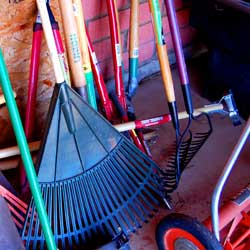
Let’s do things differently this year. Let’s save time, money and our precious tools. Resolve to only buy new hand tools with bright colored handles that are easily seen from afar and stand out to be picked up after a long day in the garden. If you already have a good selection of tools that you love and wish to keep track of, simply cover the handle with a bright colored spray paint on a sunny spring day, or wrap the handles with brightly colored tape or other coverings to make them more visible.

Similarly, take the time to clean out and declutter your garden shed, tool boxes and workbenches, making sure there is a safe, appropriate place to store every tool. If each tool has a place, you’ll be able to see at a glance when a tool may be missing and you can find it quickly before you’ve forgotten where you saw or used it last.

You and your garden will be glad you did!

trackable_tools_1

Dealing With Winter Damage

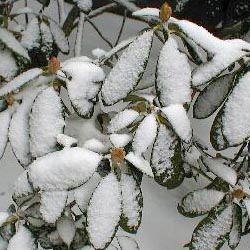
It’s early spring – time to survey the damage that winter has produced. In some areas, shrubs may still be hiding under piles of frozen snow, and could be crushed or compacted. Severed tree limbs may lie scattered across the landscape, and bark may be torn and stripped from trunks. It’s difficult to know what to tackle first, but fortunately, much of the damage is easily correctible.

Repairing Winter-Damaged Trees

When surveying and repairing winter damage, start with your trees – they are generally the most valuable additions to your property. As you survey the damage – broken limbs, torn bark, a tilting trunk – ask yourself “Is this tree salvageable or should it be removed?” If the damage is extensive, or you are unsure about how the damage may affect the tree’s overall health or future growth, hire a professional for a consultation. Replacing a severely damaged tree with a younger one, perhaps a type you like even better, may be the best solution.

If a limb is broken somewhere along its length, or damaged beyond repair, employ good pruning practices and saw off the remaining piece at the branch collar, being careful not to cut into the trunk or leave a stub. Sometimes a fallen limb may strip bark off the tree trunk. To repair this damage, cut the ragged edges of the loose bark away from the stripped area to firmly affixed healthy bark. Nature will take care of the rest. Even if the trunk of the tree is split, the tree may still be saved. For large trees, repairing this type of damage usually requires cabling and bracing done by a professional. If the tree is still young, the crotch may be pulled tightly together and tied or taped until the wound eventually heals.

Repairing Winter-Damaged Shrubs

Shrubs can suffer the same damage as trees, including broken limbs and stripped bark. Heavy snowfall can crush smaller shrubs, and larger varieties may have their trunks or centers split from heavy snow or ice accumulation. Most shrubs are resilient, however, and slowly regain their shape as the weather warms. If branches are bent but not broken, you may tie them together to help them along and prevent further damage from late-season storms. Do not tie tightly and remove twine after about a year. Completely broken branches may be pruned away, but take care to maintain the shrub’s form and balance, keeping in mind its growth pattern so it will not look lopsided or ungainly. Again, if the damage is severe, you may need to replace the plant.

The harder the winter is, the more of a beating trees and shrubs will take. With prompt attention in early spring, however, you can easily undo much of the damage and help your landscape recover with ease.

damage_1damage_2

Trees For Small Spaces

There’s something about putting a tree in the ground that just feels right. In many cases, you start with just a bare trunk with a few branches and then, rather quickly, it begins sprouting new growth. You nurture your new acquisition and each year it increases in height and girth. Finally, one day, you look out the window and a magnificent mature tree is there to greet you!

Trees are a permanent addition to the landscape and therefore require more thought and planning in their selection. When choosing, you will need to consider how much space you have, both above and below the ground, and how large your tree will be at maturity. Large trees should be given the space that they need to grow and thrive.  Some have far reaching roots that, when planted in the wrong location, can damage plumbing and underground utilities as well as buckle nearby pavement. Poor planning may also lead to unwanted heavy branches towering dangerously over the roof of your home. To avoid these problems there is a plethora of small to medium trees available that look great and cause no damage when planted close to your house, sidewalk or driveway.

TREES FOR SMALL SPACES

Acer ginnala (Amur Maple)– multi-stemmed, rounded habit, bright red fall color, 15 – 20’h x 15 – 20’w

Acer griseum (Paperbark Maple) – upright, irregular habit, exfoliating bark, excellent red fall color, 20 – 30’h x 15 – 25’w

Acer palmatum (Japanese Maple) – numerous varieties, textures, colors and forms and sizes for every taste and situation

Aesculus pavia (Red Buckeye) – native, red upright flowers in May to early June, flowers attract hummingbirds, 10 – 20’h x 10 – 20’w

Amelanchier canadensis (Shadblow Serviceberry) – native, shrubby, multi-stemmed trunk tree, white flowers in early spring, edible purplish-black fruit, reddish-orange fall color, 6 – 15’h x 15 – 20’w

Betula pendula ‘Youngii’ (Young’s Weeping Birch) – strong weeping tendency, attractive white bark, yellow fall color, 8 – 12’h x 10’w

Carpinus caroliniana (American Hornbeam) – native, multi-stemmed, smooth muscular gray bark, yellow/red/orange fall color, 20 – 30’h x 20 – 30’w

Cercis Canadensis (Eastern Redbud) – native, often multi-stemmed, purple-pink flowers in early spring, 20 – 30’h x 20 – 30’w

Chionanthus viriginicus (Fringe Tree) – native, multi-stemmed, rounded habit, fringe-like white flowers in May to early June, golden-yellow fall color, 12 – 20’h x 12 – 20’w

Cornus alternifolia (Pagoda Dogwood) – native, tiered horizontal branching, white flowers late May – early June, blue-black fruit, persistent coral colored fruit stalks, yellow/reddish/purple fall color, 25’h x 25’w

Cornus florida (Flowering Dogwood) – native, rounded habit, white or pink flowers in mid-May, reddish-purple fall color, 30’h x 30’w

Cornus kousa (Korean Dogwood) – rounded habit, vase shaped branching habit, flowers white aging to pink in early summer, red to purple fall color, 30’h x 30’w

Cornus mas (Cornelian Cherry Dogwood) – native, multi-stemmed, rounded habit, small yellow flowers in early spring, bright red berries in the summer eaten quickly by birds, 20’h x 20’w

Crataegus viridis ‘Winter King’ (Winter King Hawthorn) – native, broad horizontal crown, white flowers in spring, yellow fall color, abundance of small red berries in winter, 15’h x 20’w

Halesia tetraptera (Carolina Silverbell) – native, irregular to rounded and broad shaped, pendulous white bell-shaped flowers in May, Smooth muscle-like bark, 30 – 40’h x 25 – 35’w

Magnolia stellata (Star Magnolia) – Multi-stemmed tree with oval habit, lightly fragrant showy white blooms in early spring, ornamental smooth silver-gray bark, 15 – 20’h x 10 – 15’w

Malus sargentii (Sargent crabapple) – Mounded habit, blooms April through early May, fragrant flowers, pink-red in bud opening to white, very showy deep red fruit held in clusters, 6 – 8’h x 9 – 12’w

Prunus cerasifera ‘Thundercloud’ (Thundercloud Plum) – Rounded habit, deep purple foliage all year around, slightly fragrant pink flowers in the spring, 20’h x 20’w

Stewartia koreana (Korean Stewartia) – pyramidal or oval in shape, white flowers in June and July, long bloom time, excellent fall color orange/yellow/red/purple, 25’h x 12’w

Stewartia ovate (Mountain Stewartia) – slow grower, dense with spreading branches, white flowers in July, orange to red fall color, 10 – 15’h x 10 – 15’w

Stewartia pseudocamellia (Japanese Stewartia) – slow grower, pyramidal, solitary white camellia-like flowers June – August, excellent fall color yellow/red/purple, beautiful exfoliating camouflage bark exposed in the winter, 40’h x 20’w

Styrax japonica (Japanese Snowbell) – horizontal branching, broad flat topped at maturity, hanging white flowers from late May into June, good fall color of yellow with a reddish cast, 20 – 30’h x 20 – 30’w

Syringa reticulate (Japanese Tree Lilac) – stiff spreading branches, fragrant showy white flowers borne in early summer on panicles up to 1′ long and up to 10” wide, 20 – 20’h x 15 – 15’w

Tree Peony: The Ancient Empress

From the ancient palace gardens of China comes an elegant empress, the tree peony. Native to China, the tree peony (Paeonia suffruticosa) has been grown by Chinese herbalists, gardeners and nobility for more than 1,500 years. In 1994, China named this beauty as its national flower, giving it a treasured place in history and sparking more interest in its botanical nature worldwide.

In recent years, tree peonies have become increasingly popular and more readily available for landscape use. This plant is distinctly different from the herbaceous peony that we are so familiar with in our American perennial beds. The tree peony is a deciduous woody plant with fern-like foliage that produces larger flowers two weeks earlier than its perennial partner. These blossoms come in a wide range of shapes, colors and fragrances depending on the cultivar, providing great variety to suit any landscape.

Tree Peony Particulars 

Not sure if the tree peony will be best for your landscape? Learning more about these exotic beauties can help you decide if you want to welcome one to your yard.

  • This slow-growing woody shrub grows 4-10 feet tall with distinctive, silken blossoms in a multitude of shapes, colors and fragrances.
  • Flowers best with most vigorous blooms in dappled shade with 3-4 hours of filtered sunlight per day.
  • Tree peonies require a site with good drainage amended with plenty of organic matter. Space plants at least 4 feet apart to provide good air circulation.
  • Prefers a soil pH range of 6.5-7.0. Use organic mulch or added sulfur to lower the pH level if necessary for the best nutrition.
  • Tree Peonies are heavy feeders. Do not fertilize the first year. Foliar feed in the spring of the second year when the leaves emerge with an organic fertilizer. Fertilize again after blooming and again in the fall before dormancy. Spread organic material (compost or manure) around the base of the plant each spring and gently work into the soil for slowly-released nutrition.
  • Virtually pest- and disease-free if planted in a good location with organically-rich soil to feed from.
  • Deadhead after blooming and clean up fallen leaves in autumn to keep the tree looking its best in every season.
  • Prefers to be transplanted in the fall if moving is necessary, or plant new specimens in fall to allow them to establish before winter.

Once your tree peony is established it will reward you each year with an abundance of glorious blooms, bringing exotic flair and distinction to your landscape.

sunny garden

Plants for Wet Soil

More water is always good for plants, right? Wrong! When water stands in the soil, air is displaced, which in turn smothers the plant roots. Once the roots are damaged many symptoms appear on leaves and shoots including wilting, marginal and inter-veinal browning of leaves (scorch), poor color and stunted growth. But the excess water isn’t always coming from overwatering, it may be the result of poor draining soil.

Poor drainage is often produced in disturbed sites when heavy clay soil is compacted by construction machinery or other excessive use, such as yards where several children are often playing. Areas cultivated for plantings, such as flowerbed or borders, then collect water running off the compacted ground – this is called the teacup effect. Wet areas may also be the result of swales, drain spout runoff and low areas even when soil percolation is adequate in most of the site but when general moisture levels are routinely high.

To check for a potential drainage problem, dig a hole at least 2 feet deep, fill it with water and note how long the water remains. If it doesn’t drain completely away within 24 hours a severe drainage problem exists.

Fortunately, you can correct drainage problems in different ways. Easy options include…

  • Divert water past plantings using drainage pipes, splash blocks or rain chains.
  • Plant in mounds or raised beds so water will run off and away from the plants.
  • Install drain tiles in saturated areas or use French drains to contain excess water.
  • Amend the soil with organic matter such as compost to improve its structure.

An even easier solution is to simply select plants that tolerate wet sites. The following trees and shrubs tolerate wet sites and flooding better than most. Few tolerate standing water for long periods (those that grow in truly swampy conditions are marked *), but all will do better in wet areas.

Shade Trees

  • *Acer rubrum/Red Maple
  • *Betula nigra/River Birch
  • Liquidambar styraciflua/Sweet Gum
  • Alyssa sylvatica/Sour Gum
  • Platanus occidentalis/Sycamore
  • Quercus phellos/Willow Oak
  • *Salix spp./Willow
  • *Taxodium distichum/Bald Cypress

Flowering Trees

  • Amelanchier Canadensis/Serviceberry
  • Magnolia virginiana/Sweetbay Magnolia

Evergreen Trees

  • Calocedrus decurrens/Incense Cedar
  • Ilex opaca/American Holly
  • Thuja occidentalis/Pyramidal Arborvitae

Deciduous Shrubs

  • *Aronia arbutifolia/Chokeberry
  • Clethra alnifolia/Summersweet
  • *Cornus spp./Twig Dogwoods
  • Enkianthus campanulatus/Enkianthus
  • Ilex verticillata/Winterberry
  • *ltea virginica/Virginia Sweetspire
  • Lindera benzoin/Spicebush
  • Myrica pennsylvanica/Bayberry
  • *Rhododendron viscosum/Swamp Azalea
  • *Salix spp./Pussy Willow
  • Viburnum spp./Viburnums

Evergreen Shrubs

  • *Andromeda polifolia/Bog Rosemary
  • *Chamaecyparis thyoides/White Atlantic Cedar
  • *llex glabra/Inkberry
  • Kalmia atifolia/Mountain Laurel
  • Leucothoe spp./Leucothoe

Perennials

  • *Arundo donax/Giant Reed Grass
  • Aster nova-angliae/Asters
  • Astilbe spp./Astilbe
  • Chelone/Turtlehead
  • Cimicifuga racemose/Snakeroot
  • Helenium autumnale/Helen’s Flower
  • Hibiscus moscheutos/Hardy Hisbiscus
  • *Iris kaempferi/Japanese Iris
  • Iris siberica/Siberian Iris
  • *Lobelia cardinalis/Cardinal Flower
  • Lobelia syphilitca/Blue Lobelia
  • Monarda didyma/Bee Balm
  • Myosotis scorpiodes/Forget-me-nots
  • Tiarella cordifolia/Foam Flower
  • Trollius europaeus/Globe Flowers
  • Viola spp./Violets

Ground Covers

  • Gallium odoratum/Sweet Woodruff
  • Gaultheria procumbers/Wintergreen
  • Hosta spp./Hosta
  • Mentha spp./Mint
  • Parthenocissus quinquifolia/Virginia Creeper

Annuals

  • Cleome hosslerana/Spider Flower
  • Myosotis sylvatica/Forget-me-nots
  • Torenia fournien/Wishbone Flower
  • Viola wittrockiana/Pansies

Not sure which water-loving plants to choose? We’d be happy to help you evaluate your landscape moisture and other conditions to help you choose the very best plants for your yard!

Two feet wearing rain boots standing in the mud

Cool Wave Pansy

Make way for Cool Wave Pansy! New and improved, bigger and brighter, the familiar little monkey-faced pansy is the new garden darling. These flowers are even more versatile and easier than ever, and ideal for so many beautiful landscaping options.

New Pansies

Cool Wave Pansy is a relatively new cultivar that has so much to offer. These flowers are ideal in beds among other plants and shrubs as a colorful vigorous filler, planted en masse as a blooming groundcover or planted to create amazing baskets and container arrangements with 30” of cascading floral beauty. Standing 6-8 inches tall and covered with three times as many blossoms as regular pansies, Cool Wave Pansies have flowers that glow in four new colors.

  • Frost: White with light blue “frost” edging along the petal margins
  • Violet Wing: Front lower petals are white edged with lavender or darker purples, backed with dark burgundy or purple on upper rear petals
  • Yellow: Bright lemony or sunny yellow blooms
  • White: Bright white petals with slight color variations for elegant interest

Growing Tips

Easy to grow, Cool Wave Pansy is much more vigorous than ever. Choose plants with an overall deep green color with plenty of buds for the best results and fastest blooming. Plant in fertile soil where the plant will receive 6 hours of daily sunlight. Use a liquid fertilizer when planting and fertilize every two weeks to maintain vigor and color. Replace with wave petunias in the summer when it becomes too warm for pansies.

Cool Wave Pansy grows well in rain or cold. In fact, it easily overwinters in many areas. This three-season performer may be planted for fall color, overwinter, and then perk up again in early spring providing an early punch of pizzazz. If it becomes too leggy, just cut back the foliage back to 3 inches tall and fertilize. In a couple of weeks, it will be smiling up at you.

When planting in containers, consider the flower and container colors to maximize the visual effect. Interplant with other textures and colors for an eclectic rainbow of vibrance. When planting in fall, add spring blooming bulbs, as they’ll easily grow through the pansies to create a riot of spring color. Spiky grasses provide a tall and contrasting effect to the pansy’s trailing tendrils, especially in larger containers.

With so many stunning options and new colors to embrace, there’s sure to be a Cool Wave Pansy perfect for all your flower planting desires!

pansy_3

pansy_1

Herbs As Companion Plants

Practiced by organic gardeners for years, companion planting has become very popular for all gardeners. The concept is to plant together species that will benefit each other, to help prevent disease and insect infestation without the use of chemicals. In general, herbs and other aromatic plants like tomatoes, marigolds and onions are helpful in warding off insects. Certain colors, like the orange of nasturtium flowers, are thought to repel flying insects. While these practices have not been scientifically proven, many gardeners have been using them for years with positive results. Try it – and see if it works for you!

Best Companion Herbs

The exact herbs you choose to pair with other plants will depend on what you want to grow and what problems you want to eradicate. The most common herbs and their purported benefits include…

  • Basil – Enhances the growth of tomatoes and peppers. Dislikes rue. Repels flies and mosquitoes.
  • Borage – Companion to tomatoes, squash and strawberries. Deters tomato worm.
  • Chamomile – Companion to cabbages and onions. Improves the growth of all garden plants.
  • Chervil – Companion to radishes.
  • Chives – Companion to carrots. Deters Japanese beetles, blackspot on roses, scab on apples and mildew on cucurbits.
  • Dill – Improves the growth of lettuce, cabbage and onions. Dislikes carrots.
  • Fennel – Most plants dislike it – avoid using it as a companion herb and instead plant it away from the garden.
  • Garlic – Plant near roses and raspberries. Deters Japanese beetles.
  • Horseradish – Plant at the corners of your potato patch; deters potato bug.
  • Hyssop – Companion to cabbage and grapes. Deters flea beetles and cabbage moths. Dislikes radishes.
  • Marigolds – Plant throughout the garden as they discourage nematodes and other insects.
  • Mints (esp. Spearmint and Peppermint) – Companion to cabbages and tomatoes. Deters aphids, flea beetles and many types of cabbage pests.
  • Nasturtium – Companion to radishes, cabbage and cucurbits. Plant under fruit trees. Deters aphids and squash bugs.
  • Onion – Repels cabbage loopers, potato beetles, carrot flies and imported cabbage moths.
  • Oregano – Improves the growth of beans.
  • Parsley – Enhances the growth of roses. Repels asparagus beetles.
  • Pot Marigold – Companion to tomatoes, but plant elsewhere, too. Deters tomato worm, asparagus beetles and other pests.
  • Rosemary – Companion to cabbage, bean, carrots and sage. Deters cabbage moth, bean beetles and carrot fly.
  • Rue – Companion to roses and raspberries, dislikes sweet basil. Deters Japanese beetles.
  • Sage – Plant with rosemary, tomatoes, strawberries, cabbage and carrots. Dislikes cucumbers. Deters cabbage moth and carrot fly.
  • Summer Savory – Companion to beans and onions. Deters bean beetles.
  • Tansy – Plant under fruit trees. Companion to roses and raspberries. Deters flying insects, Japanese beetles, striped cucumber beetles, squash bugs and ants.
  • Tarragon (French) – Enhances the growth of all vegetables.
  • Thyme – Improves the growth of tomatoes, potatoes and eggplant. Repels whiteflies and cabbageworms.
  • Wormwood – Use as a border, keeps animals from the garden.
  • Yarrow – Plant along borders, paths and near aromatic herbs. Enhances production of essential oils. Attracts beneficial insects including ladybugs and predatory wasps.

Exactly how much benefit companion plants give to one another will vary; be sure to choose varieties to group that have similar soil, light, water and fertilization needs. Even if their companion benefits may not pan out, you’re sure to enjoy a more diverse and vibrant garden filled with delicious vegetables and herbs!

herbs_companion_3

herbs_companion_1

herbs_companion_2

Cold-Tolerant Flowering Plants

Cold doesn’t have to kill your dreams for beautiful flowerbeds overflowing with vibrant color and stupendous blooms. While the deepest freezes of winter will put a stop to any flowering plant, there are beautiful plants that can chill out without damage or difficulty. The trick is recognizing which of these cold-tolerant flowering plants will work best in your climate and garden, and we’re here to help with that.

Freeze Tolerant Annuals

These are annuals that can withstand freezing temperatures and hard frosts for short periods with little or no injury. The best options include…

  • Marguerite Daisy (Argyranthemum frutescens)
  • Swan River Daisy (Brachycomb iberidifolia)
  • Million Bells (Calibrachoa x hybrida)
  • Dracaena Spike (Cordyline australis)
  • Dusty Miller (Scenecio cineraria)
  • Gazania (Gazania rigens)
  • Nemesia (Nemesia fruticans)
  • Cape Daisy (Osteospermum spp.)
  • Petunia (Petunia x hybrida)
  • Sweet Pea (Lathyrus odoratus)
  • Verbena (Verbena x hybrida)

Semi-Hardy Annuals

These are annuals that are perennials in warmer zones and can actually overwinter in cooler areas during mild winters of if they are located in a warm, sunny, protected spot. These are very frost and freeze tolerant annuals…

  • Annual Carnation (Dianthus caryophyllus)
  • Annual Pinks (Dianthus chinensis)
  • Pansy (Viola x wittrockiana)
  • Purple Fountain Grass (Pennisetum setaceum ‘Rubrum’)
  • Mealycup Sage (Salvia farinacea)
  • Variegated Vinca Vine (Vinca major ‘Variegata’)

Perennials

Perennials are plants with roots that survive through the winter months, sending out new growth each spring. Appearing in your garden year after year, they become old and treasured friends. Perennials come in many sizes, shapes and colors with various bloom times and periods. It is best to plan your garden by the bloom time of the plant along with its cultural needs (sun/shade and drought-tolerant/water-lovers, etc.) to be sure you have a good, healthy balance of plants that will keep your garden and landscaping lush for months. Because these plants have evolved to survive the winter’s cold, they are all cold-tolerant to at least some measure. Popular favorites include…

  • Dicentra ‘Luxuriant’ – No garden is complete without a patch of Bleeding Hearts. This fringed variety is longer blooming than the old-fashioned selections. Rose-pink flowers are borne gracefully above soft green foliage with a slight blue cast that looks fresh all summer. 18-24” tall. Plant in part shade.
  • Bergenia – Spikes of delicate pink blooms soften the bold evergreen foliage of this early blooming perennial in March or April.
  • Armeria (Sea Pink) – Another evergreen perennial, this bloomer sends out masses of papery pink or white flowers above grass-like clumps of foliage.
  • Basket of Gold (Aurinia) – Charming yellow flowers float above dense mats of attractive gray foliage on this old-fashioned favorite. Plant in full sun. Excellent for a rock garden.
  • Candytuft (Iberis) – Flat-topped clusters of white flowers cover this evergreen perennial in early spring. Excellent as an edging in a border or to use in a rock garden.
  • Columbine (Aquilegia) – Beloved by hummingbirds and butterflies, columbine is also a great cut flower. Available in many color shades and bi-color combinations, columbine is perfect in any border or landscape situation.
  • Coralbell (Heuchera) – Tiny bell flowers on 1-2’ slender stems bloom from spring into summer. Shades of foliage vary from green to pink to deep burgundy. Plant in sun or shade.

Not sure which plants are best for the cold in your yard? Stop in and see our landscaping experts today for help choosing just which blooms will heat up even on cold days!

cold_tolerant-3

cold_tolerant

cold_tolerant_1

cold_tolerant-2

Scented Geraniums

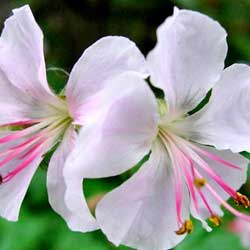
Unmatched for fragrance and beauty in the garden, scented geraniums are undoubtedly showstoppers. With many to choose from, each with its own distinctive habit and fragrance, scented geraniums are also great for hanging baskets, window boxes or any type of container. Although the colorful flowers are small, the leaves of the scented geranium are the most spectacular part of this unusual herb.

A Bouquet of Scents

Scented geraniums come in a wide range of distinctive aromas. Some of the most popular varieties include…

  • Rose Geranium: This cultivar has spicy rose-scented foliage with small clusters of pink flowers among the dark green leaves.
  • Peppermint Geranium: This is a fast growing geranium that spreads to a 4-6 foot mound with clusters of white flowers appearing in summer. Leaves are lobed and medium green. This is a particularly good one for hanging baskets.
  • Lime Geranium: This geranium shows off beautiful lavender flowers in summer and its leaves are serrated, round and light green. These can become quite bushy.
  • Apple Geranium: Apple-scented geranium is another good one for a hanging basket. Clusters of white flowers appear on trailing stems and leaves are round and ruffled.
  • Lemon Geranium: This geranium has tiny purplish flowers and small wrinkled leaves. This one features a nice clean lemon scent that freshens a room quickly.
  • Coconut Geranium: This plant has a trailing habit that works nicely as a ground cover or in a hanging basket. Its flowers are in small clusters and its leaves are round and dark green.

Other popular scented geraniums include chocolate, nutmeg, orange, apricot and almond.

Growing Tips

Scented geraniums are not particular about soil, as long as it is drained – they do not tolerate wet roots well. These plants enjoy full sun and cool climates, with partial shade in warm areas. Pinching off end leaves will encourage bushiness to help keep a fuller, more compact form.

The leaves can be harvested any time and used fresh or dried.

Harvesting and Use

One of the real joys of scented geraniums is harvesting the leaves and using their fragrance in a variety of ways. The leaves can be harvested at any time, and they may be used fresh or dried, though the fragrance may change somewhat or its potency may change as it is dried. Experiment with both fresh and dried leaves to find the aromas you like best.

Scented geraniums can be used in some jellies, puddings, stuffing, punches, teas and vinegars. The oils in leaves are often distilled to make perfume, and the leaves make a sweet addition to sachets and potpourris. No matter how you use them, or even if you simply enjoy them in the garden, these lovely plants are sure to be a welcome addition to your garden and landscaping.

citronella leaf on grunge wood