Author Archives: D.R. Snell Nursery

Top 10 Fool Proof Houseplants

Do you have a “black thumb”? Do you love houseplants but just can’t seem to keep them alive no matter what their species or condition? Are you worried about getting new plants because being in your home is a death sentence for anything green? Worry no more! This list of foolproof houseplants will help you select and grow houseplants with confidence. Although all plants look and grow better with optimum care, these plants are some of the toughest you can find and will tolerate more abuse and neglect than most others.

  1. Radiator Plant / Pepperomia  (Peperomia caperata)
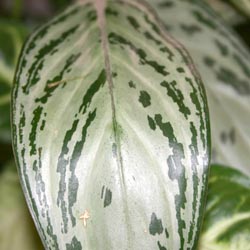
  2. Chinese Evergreen (Aglaonema hybrids)
  3. Nerve Plant (Fittonia)
  4. Dracaena (Dracaena spp.)
  5. Jade Plant / Friendship Tree / Money Plant (Crassula ovate)
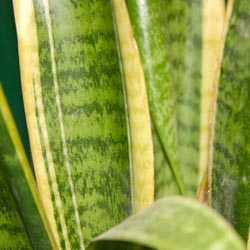
  6. Mother-In-Law’s Tongue / Snake Plant (Sansevieria trifasciata)
  7. Peace lily (Spathiphyllum cochlearispathum)
  8. Philodendron (Philodendron spp.)
  9. Pothos (Epipremnum aureum)
  10. Spider Plant / Airplane Plant (Chlorophytum comosum)

Good Care Basics

While these tough plants can withstand some neglect, it isn’t as hard as you may think to provide them with proper care. No matter what type of houseplant you choose, some good rules of thumb that can help keep them happy include…

  • Position plants in a brightly lit room, but out of direct sunlight that can cause burns on the foliage. If the plant is stretching toward the window – turning to face the light – it can use more sunlight.
  • Use good quality potting soil appropriate to pot plants, and fertilize them regularly to provide adequate nourishment. Reduce fertilizing during the winter months when growth naturally slows.
  • Water plants regularly, but allow the top 2-3 inches of soil to go dry between waterings. The pot should have drainage holes, and never let a houseplant sit in a saucer of water – that can lead to root rot.
  • Group pots together to increase the humidity around the houseplants and reduce the yellow tips of leaves (a sign of dryness in the air). Use a wet pebble tray or mist plants to raise humidity as well.
  • Dust plants 1-2 times per month to keep their leaves bright and pores clear for better gas exchange. Be gentle, however, and do not use waxing sprays or other dusting chemicals on houseplants.

It can be a great joy to have houseplants thriving in your home. No matter how many plants you may have killed in the past, you’ll soon be a successful houseplant gardener when you choose plants that don’t mind kind-hearted abuse!

Houseplants_2Houseplants_3

Save

Save

Determinate Versus Indeterminate Tomatoes

It’s tomato-planting time again! If you’ve grown tomatoes in the past, you most likely have your favorites. If not, just ask! You’ll find some pretty strong opinions regarding tomato choices, and every gardener has their own top choices, must haves and great picks for tomatoes.

Choosing Tomatoes

Along with soil type, climate, moisture and other typical gardening considerations, one of the features you will need to take into account when choosing what type of tomato to grow is plant habit. The two main habit classifications are “determinate” and “indeterminate” and are based on fruit use, available growing space and length of growing season. Both habit classifications include fruit selections in a wide variety of colors, sizes, shapes and tastes.

Determinate Tomatoes

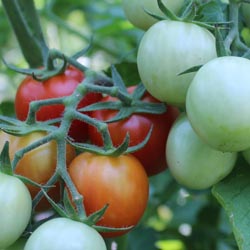
Tomatoes from a determinate plant are produced earlier in the growing season, on terminal ends of a compact bush. This type of tomato generally reaches 3-4 feet in height and is easily supported with a tomato cage or may even be self-supporting. Due to its compact habit, it may even be grown in containers, ideal for gardeners with less available space. Because all the fruit ripens at the same time, determinate tomatoes are an excellent choice if you plan to can your fruit or make sauce, as you won’t need to worry about collecting enough fruit to work with. Determinate classification includes popular tomato varieties such as:

  • “Celebrity” – an eating/slicing tomato
  • “Roma” – a paste tomato
  • “Sugary” – a cherry tomato
  • “Carolina Gold” – extra large, yellow fruit

Indeterminate Tomatoes

Indeterminate tomato plants will fruit along the entire length of the stem over a longer period of time, in fact continually, until frost. Smaller amounts of fruit ripening regularly throughout the growing season makes an indeterminate tomato plant an excellent choice if you cannot cook or consume a large quantity of this perishable fruit all at one time. Indeterminate tomato plants are vines, requiring proper pruning and support, to reach their ultimate height of 8 feet or more. Indeterminate classification includes popular varieties like:

  • “Amish Paste” – heirloom, paste tomato
  • “Beefmaster” – extra large sandwich tomato
  • “Better Boy” – juicy but firm, compact vine with shorter internodes
  • “Black Krim” – deep color, rich flavor
  • “Chocolate Cherry” – cherry, chocolate red in color

By understanding the differences between these basic tomato classifications, it will be easy for you to choose the tastiest tomato to suit your gardening needs and harvest preferences. Many gardeners choose more than one of each type of tomato, ensuring there is always a bountiful supply to use, to share and to enjoy!

Tomatoes

Watering Tomato Plants

Proper watering plays a significant role in producing a healthy tomato plant with tasty, meaty, juicy fruit. So, what’s the secret, and how can you be sure you are watering your tomatoes the right way?

Watering Location

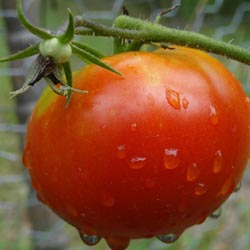
Always water tomatoes at the root zone; never overhead water your tomato plant. Watering directly at the soil level will strengthen the plant’s root system and ensure the maximum amount of moisture reaches the roots. When you overhead water, much of the water will not make it to the roots as it evaporates before reaching the soil. Water droplets on plant leaves act as a magnifying glass and can burn tender plant tissue, damaging foliage that is essential to keep the plant healthy. Water dripping from leaf to leaf can also spread disease, infecting an entire crop. To be sure tomatoes are not being watered inappropriately, keep plants out of reach of lawn sprinkler systems or other inadvertent watering.

Watering Speed

Slow watering is essential to properly distribute moisture to a tomato plant. Allow the water to drip slowly into the soil, giving the plant roots time to absorb the moisture. A drip system is best and will also help with water conservation. Avoid using a hand held hose, as it is easy to either underwater or overwater using this method. Water to a depth of 8 inches to ensure all roots have access to adequate moisture. You can also use a watering reservoir, such as a gallon jug with several small holes in its bottom, to slowly and carefully water the plants without flooding the root zone.

Watering Frequency

A regular watering schedule is essential for the healthiest, most productive tomato plants. Water consistently to produce larger fruits and to avoid split and cracked fruit and blossom end rot. Tomato plants should be watered 2-3 times a week in the height of summer or when natural rain is lacking. A deep soaking rain counts and supplemental watering should be adjusted whenever Mother Nature lends a hand with watering chores. The top inch or two of soil should dry out between watering to be sure the plant is not getting too much moisture.

Watering Adjustments

There are several times when it may be necessary to adjust where, when and how much you water your tomatoes. Changes in local rainfall – increasing spring or summer rains, a sudden storm, an unexpected drought – can require changes in supplemental watering to keep the moisture to your tomatoes consistent. As plants grow and more fruit appears, more water may be needed to meet the plant’s watering needs and keep it lush and healthy.

By understanding the basics of watering tomatoes, you can keep your plants well hydrated without risk of either overwatering or underwatering, both of which could be disastrous for your tomato crop.

WaterTomato

Rose – Queen of the Garden

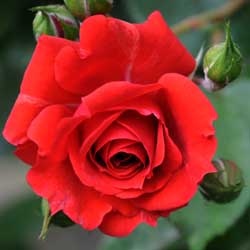
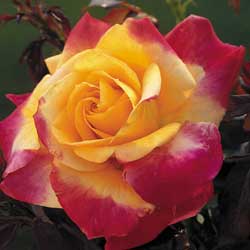
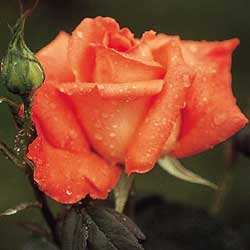
We all love roses. It may be the luxurious fragrances, rich colors or the elegant flower forms that attract us. It may be the memories that roses evoke. Whatever the reason, roses are one of the world’s most popular flowers. With so many different types of roses available, ranging from the diminutive miniatures to the towering climbers, there is no excuse to exclude this “Queen of Flowers” from your garden.

Rose Types

There are many types of roses to cultivate, and it can be difficult to choose. If you’re just getting started with roses, consider some of these popular favorites…

  • Hybrid Tea Roses: These blooms are a favorite of rose gardeners who enjoy long-stemmed, large flowers. Hybrid tea flowers have many petals and plants grow upright and tall, about 3-7 feet. These roses are appropriate in either a formal garden or informal planting.
  • Floribunda Roses: These roses have smaller flowers than hybrid teas with the flowers arranged in clusters. This rose bush is useful as a hedge for a border or privacy screen, and is equally stunning in mass plantings.
  • Grandiflora Roses: These beauties were developed by crossing hybrid teas with floribundas. This rose grows to around 10 feet tall so it should be used in the back of the border where its beauty won’t shroud other plants. The flowers of the Grandiflora are hybrid tea form and can be single stemmed or borne in clusters depending on the cultivar.
  • Climbing Roses: These roses make an outstanding vertical display when trained on arbors, walls, fences, trellises and pergolas and can grow from 8-15 feet tall. Flowers may be borne large and single or small and arranged in clusters.
  • Miniature Roses: These delicate nymphs are dwarf in every way – flowers, leaves and height. This rose may be mass planted as a ground cover, used as border or grown in containers on decks, patios and porches.
  • Shrub Roses: These flowers are renowned for their bushy habit and superior disease resistance making them an excellent choice for mass planting. The shrub rose flower may be either single or double. Some types have very showy rose hips.
  • Old Roses: These luscious heirlooms are making a come-back! Although bloom times and color choices are limited, old roses are much more fragrant, vigorous and disease resistant than modern roses. To obtain all the qualities of an old rose combined with a long bloom time of a modern rose, look for the David Austin varieties.

Not sure which rose is just right for your landscape or garden? Our rose experts will be glad to help you choose the perfect rose no matter what thoughts or emotions you want your garden to evoke. Stop in today to see the latest types of roses and the most popular cultivars for this year’s gardening.

roses_3

roses_8

roses_1

Growing Under Black Walnut

If you have a black walnut tree on your property, you know how difficult it can be to find anything that will grow anywhere near this plant.

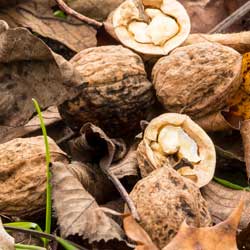
Black walnuts release a substance called juglone into the soil, which is toxic to many ornamental and edible plants and can stunt their growth significantly – in fact, juglone is used as a herbicide in some areas! A mature black walnut tree can have a toxic zone with up to an 80-foot radius, depending on the tree’s size and age. Every part of the walnut tree contains juglone and this substance remains in the soil long after the tree is cut down, continuing to inhibit anything that may be planted in its place.

Fortunately, there is a wide variety of plants that are less affected by juglone and can still thrive in contaminated soil. When choosing to plant in an area where a black walnut is located or where one once stood, it is safe to make your selection from the lists below.

Vegetables

  • Beans
  • Corn
  • Carrots
  • Melons
  • Squash

Fruit

  • Black Raspberry
  • Cherry
  • Nectarine
  • Peach
  • Pear
  • Plum

Annuals

  • Pot-marigold, Calendula officinalis
  • Begonia, fibrous cultivars
  • Morning Glory, Ipomoea
  • Pansy, Viola
  • Zinnia species

Perennials

  • Bugleweed, Ajuga reptans
  • Hollyhock, Alcea rosea
  • European Wild Ginger, Asarum europaeum
  • Astilbe species
  • Bellflower, Campanula latifolia
  • Leopard’s-Bane, Doronicum species
  • Sweet Woodruff, Galium odoratum
  • Cranesbill, Geranium sanguineum
  • Common Daylily, Hemerocallis
  • Coral Bells, Heuchera
  • Plantain-lily, Hosta
  • Siberian Iris, Iris sibirica
  • Balm, Monarda didyma
  • Sundrops, Oenothera fruticosa
  • Summer Phlox, Phlox paniculata
  • Polyanthus Primrose, Primula x polyantha
  • Lungwort, Pulmonaria species
  • Showy Sedum, Sedum spectabile
  • Lamb’s-Ear, Stachys byzantina
  • Spiderwort, Tradescantia virginiana
  • Horned Violet, Viola cornuta

Ferns

  • Crested Wood Fern, Dryopteris cristata
  • Senstitive Fern, Onoclea sensibilis
  • Cinnamon Fern, Osmunda cinnamomea

Bulbs

  • Glory-of-the-Snow, Chionodoxa luciliae
  • Crocus species
  • Winter Aconite, Eranthis hyemalis
  • Snowdrop, Galanthus nivalis
  • Spanish Bluebell, Hyacinthoides hispanica
  • Grape Hyacinth, Muscari botryoides
  • Siberian Squill, Scilla sibirica

Trees

  • Japanese Maples, Acer palmatum
  • Eastern Redbud, Cercis canadensis
  • Canadian Hemlock, Tsuga canadensis

Vines and Shrubs

  • Euonymus species
  • Rose of Sharon, Hibiscus syriacus
  • Honeysuckle, Lonicera species
  • Virginia Creeper, Parthenocissus quinquefolia
  • Arborvitaes, Thuja species

Black walnut can be a challenging plant to have in your landscape, but if you understand the unique characteristics of this tree you can easily pair it with other plants that don’t mind its toxic effects.

Walnut_2Walnut_1

Biokovo Geranium

“So many Geraniums, so little time.” If this is your motto, we completely understand. There are so many fantastic varieties to choose from, but Geranium ‘Biokovo’ is extraordinary. Allow us to tell you why.

First, a little clarification regarding geraniums. Unlike our tender summer annual, commonly called “geranium” (genus: Pelargonium), true Geraniums are hardy, low growing, groundcover perennials commonly known as Cranesbill. I know, this is confusing, but when you see these two “geraniums”, they look nothing alike and they certainly do not behave similarly.

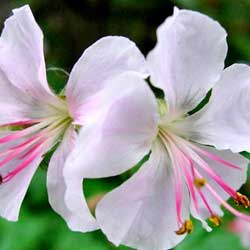
G. ‘Biokovo’, originally found growing in the mountains of Croatia, is cold hardy and semi-evergreen in hardiness zones 5 – 8. Growing up to a foot tall, this Cranesbill blooms in late spring, May to June, with five-petaled, ¾ inch, white flowers tinged pink. The leaves are slightly hairy, lobed, medium green turning orange-red in the fall and are highly aromatic with a pungent, orange-like scent when bruised.

Produced on spreading rhizomes, G. ‘Biokovo’ is easily grown in well-drained soil with average fertility. It is relatively drought tolerant once established and will thrive planted in either full sun or part shade. Fertilize in early spring. Plant divisions may be done in either spring or fall.

Use ‘Biokova’ in the front of the perennial border and in rock gardens. It will steal the show as a long blooming ground cover or edging plant. There are no serious pest or disease problems associate with this or any of the many other hardy Geraniums. It attracts butterflies and resists deer and rabbits.

No wonder Geranium x cantabrigiense ‘Biokovo’ was the 2015 choice for Perennial Plant of the Year!

geraniumbiokovo

Putting on Airs: Tillandsias

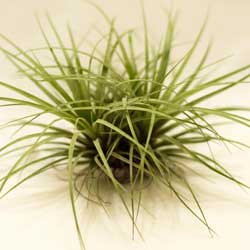
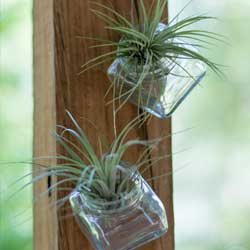
Looking for something easy to grow? The air plant, Tillandsia, should be on the top of your list. Tillandsia is the largest genus in the Bromeliad family with over 550 species that vary in color, size, texture and shape. In its native habitat, it will attach itself to trees and rocks using its roots. The air plant derives the nutrients and water they need from the air, hence its common name. And guess what? No soil is necessary! This versatile houseplant is not fussy, and when given minimal care, will adapt to most home and office environments.

Light

Place your Tillandsia where it will receive plenty of light but not direct sunlight. Direct sun will dry out the leaves very quickly. Home or office fluorescent lighting works just fine.

Temperature

50 – 90 degrees Fahrenheit

Water

Once a month, soak your air plant in water for about 20 minutes. If the plant is flowering, a delicate rinse would be more appropriate so that the bloom is not damaged. When through soaking, shake off the excess water from the plant and place in an area with good air circulation. In between soaks, spritz it once a week with clean water from a spray bottle. Indoor heat and air conditioning rob moisture from the air. If the leaves of your air plant start to wrinkle or roll, this is a sign of dehydration. If this happens, give the plant a good soak and spritz it more than once a week.

General Maintenance

It is not unusual for the outer leaves of the air plant to dry out and turn brown, simply remove them. If leaf tips dry a bit and turns brown, cut the tip off and continue with regular care. The plant will grow and look just fine.

One final note, Tillandsias have beautiful brilliant blooms but only bloom once in their lifetime. Depending on the species, the bloom may last several days to several months.

Easy, right?

tillandsias_2tillandsias_1

Trackable Tools

It’s the beginning of a new gardening season. Hopefully you took out last year’s journal in January or February and reviewed your notes on what you wanted to change, improve, experiment with or eliminate from your garden and landscape. Now is the time to begin implementing some of those great ideas, and it starts with having the right tools.

Where Do Your Tools Go?

One common problem in the garden is misplaced tools. We’ve all found hand tools in the spring that were inadvertently thrown in the compost pile or left under a shrub during fall cleanup. Many of us have spent time we didn’t have to spare walking in circles, looking for the shovel that we just had in our hand. It was laid down for a moment and seemed to disappear. Tools can easily disappear on a crowded workbench or in a cluttered shed, or they may even end up in a brush pile or other unlikely location.

When tools are lost, not only are our gardening chores impacted, but the tools can be damaged by exposure or accidental damage if they’re dropped, run over with a mower or otherwise subjected to inadvertent abuse. This can mean we no longer have the tool we need when we need it most, and we have to make a trip to the garden center to replace a tool – using time and money our gardening budget may not have.

Finding Your Tools

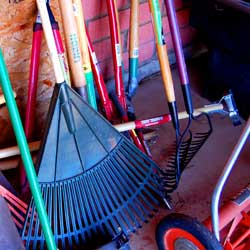
Let’s do things differently this year. Let’s save time, money and our precious tools. Resolve to only buy new hand tools with bright colored handles that are easily seen from afar and stand out to be picked up after a long day in the garden. If you already have a good selection of tools that you love and wish to keep track of, simply cover the handle with a bright colored spray paint on a sunny spring day, or wrap the handles with brightly colored tape or other coverings to make them more visible.

Similarly, take the time to clean out and declutter your garden shed, tool boxes and workbenches, making sure there is a safe, appropriate place to store every tool. If each tool has a place, you’ll be able to see at a glance when a tool may be missing and you can find it quickly before you’ve forgotten where you saw or used it last.

You and your garden will be glad you did!

trackable_tools_1

Dealing With Winter Damage

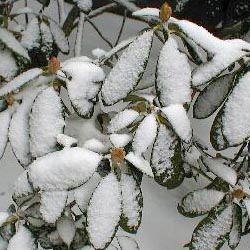
It’s early spring – time to survey the damage that winter has produced. In some areas, shrubs may still be hiding under piles of frozen snow, and could be crushed or compacted. Severed tree limbs may lie scattered across the landscape, and bark may be torn and stripped from trunks. It’s difficult to know what to tackle first, but fortunately, much of the damage is easily correctible.

Repairing Winter-Damaged Trees

When surveying and repairing winter damage, start with your trees – they are generally the most valuable additions to your property. As you survey the damage – broken limbs, torn bark, a tilting trunk – ask yourself “Is this tree salvageable or should it be removed?” If the damage is extensive, or you are unsure about how the damage may affect the tree’s overall health or future growth, hire a professional for a consultation. Replacing a severely damaged tree with a younger one, perhaps a type you like even better, may be the best solution.

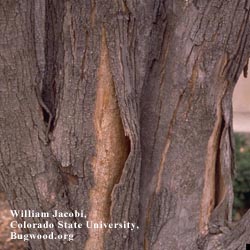
If a limb is broken somewhere along its length, or damaged beyond repair, employ good pruning practices and saw off the remaining piece at the branch collar, being careful not to cut into the trunk or leave a stub. Sometimes a fallen limb may strip bark off the tree trunk. To repair this damage, cut the ragged edges of the loose bark away from the stripped area to firmly affixed healthy bark. Nature will take care of the rest. Even if the trunk of the tree is split, the tree may still be saved. For large trees, repairing this type of damage usually requires cabling and bracing done by a professional. If the tree is still young, the crotch may be pulled tightly together and tied or taped until the wound eventually heals.

Repairing Winter-Damaged Shrubs

Shrubs can suffer the same damage as trees, including broken limbs and stripped bark. Heavy snowfall can crush smaller shrubs, and larger varieties may have their trunks or centers split from heavy snow or ice accumulation. Most shrubs are resilient, however, and slowly regain their shape as the weather warms. If branches are bent but not broken, you may tie them together to help them along and prevent further damage from late-season storms. Do not tie tightly and remove twine after about a year. Completely broken branches may be pruned away, but take care to maintain the shrub’s form and balance, keeping in mind its growth pattern so it will not look lopsided or ungainly. Again, if the damage is severe, you may need to replace the plant.

The harder the winter is, the more of a beating trees and shrubs will take. With prompt attention in early spring, however, you can easily undo much of the damage and help your landscape recover with ease.

damage_1damage_2

Trees For Small Spaces

There’s something about putting a tree in the ground that just feels right. In many cases, you start with just a bare trunk with a few branches and then, rather quickly, it begins sprouting new growth. You nurture your new acquisition and each year it increases in height and girth. Finally, one day, you look out the window and a magnificent mature tree is there to greet you!

Trees are a permanent addition to the landscape and therefore require more thought and planning in their selection. When choosing, you will need to consider how much space you have, both above and below the ground, and how large your tree will be at maturity. Large trees should be given the space that they need to grow and thrive.  Some have far reaching roots that, when planted in the wrong location, can damage plumbing and underground utilities as well as buckle nearby pavement. Poor planning may also lead to unwanted heavy branches towering dangerously over the roof of your home. To avoid these problems there is a plethora of small to medium trees available that look great and cause no damage when planted close to your house, sidewalk or driveway.

TREES FOR SMALL SPACES

Acer ginnala (Amur Maple)– multi-stemmed, rounded habit, bright red fall color, 15 – 20’h x 15 – 20’w

Acer griseum (Paperbark Maple) – upright, irregular habit, exfoliating bark, excellent red fall color, 20 – 30’h x 15 – 25’w

Acer palmatum (Japanese Maple) – numerous varieties, textures, colors and forms and sizes for every taste and situation

Aesculus pavia (Red Buckeye) – native, red upright flowers in May to early June, flowers attract hummingbirds, 10 – 20’h x 10 – 20’w

Amelanchier canadensis (Shadblow Serviceberry) – native, shrubby, multi-stemmed trunk tree, white flowers in early spring, edible purplish-black fruit, reddish-orange fall color, 6 – 15’h x 15 – 20’w

Betula pendula ‘Youngii’ (Young’s Weeping Birch) – strong weeping tendency, attractive white bark, yellow fall color, 8 – 12’h x 10’w

Carpinus caroliniana (American Hornbeam) – native, multi-stemmed, smooth muscular gray bark, yellow/red/orange fall color, 20 – 30’h x 20 – 30’w

Cercis Canadensis (Eastern Redbud) – native, often multi-stemmed, purple-pink flowers in early spring, 20 – 30’h x 20 – 30’w

Chionanthus viriginicus (Fringe Tree) – native, multi-stemmed, rounded habit, fringe-like white flowers in May to early June, golden-yellow fall color, 12 – 20’h x 12 – 20’w

Cornus alternifolia (Pagoda Dogwood) – native, tiered horizontal branching, white flowers late May – early June, blue-black fruit, persistent coral colored fruit stalks, yellow/reddish/purple fall color, 25’h x 25’w

Cornus florida (Flowering Dogwood) – native, rounded habit, white or pink flowers in mid-May, reddish-purple fall color, 30’h x 30’w

Cornus kousa (Korean Dogwood) – rounded habit, vase shaped branching habit, flowers white aging to pink in early summer, red to purple fall color, 30’h x 30’w

Cornus mas (Cornelian Cherry Dogwood) – native, multi-stemmed, rounded habit, small yellow flowers in early spring, bright red berries in the summer eaten quickly by birds, 20’h x 20’w

Crataegus viridis ‘Winter King’ (Winter King Hawthorn) – native, broad horizontal crown, white flowers in spring, yellow fall color, abundance of small red berries in winter, 15’h x 20’w

Halesia tetraptera (Carolina Silverbell) – native, irregular to rounded and broad shaped, pendulous white bell-shaped flowers in May, Smooth muscle-like bark, 30 – 40’h x 25 – 35’w

Magnolia stellata (Star Magnolia) – Multi-stemmed tree with oval habit, lightly fragrant showy white blooms in early spring, ornamental smooth silver-gray bark, 15 – 20’h x 10 – 15’w

Malus sargentii (Sargent crabapple) – Mounded habit, blooms April through early May, fragrant flowers, pink-red in bud opening to white, very showy deep red fruit held in clusters, 6 – 8’h x 9 – 12’w

Prunus cerasifera ‘Thundercloud’ (Thundercloud Plum) – Rounded habit, deep purple foliage all year around, slightly fragrant pink flowers in the spring, 20’h x 20’w

Stewartia koreana (Korean Stewartia) – pyramidal or oval in shape, white flowers in June and July, long bloom time, excellent fall color orange/yellow/red/purple, 25’h x 12’w

Stewartia ovate (Mountain Stewartia) – slow grower, dense with spreading branches, white flowers in July, orange to red fall color, 10 – 15’h x 10 – 15’w

Stewartia pseudocamellia (Japanese Stewartia) – slow grower, pyramidal, solitary white camellia-like flowers June – August, excellent fall color yellow/red/purple, beautiful exfoliating camouflage bark exposed in the winter, 40’h x 20’w

Styrax japonica (Japanese Snowbell) – horizontal branching, broad flat topped at maturity, hanging white flowers from late May into June, good fall color of yellow with a reddish cast, 20 – 30’h x 20 – 30’w

Syringa reticulate (Japanese Tree Lilac) – stiff spreading branches, fragrant showy white flowers borne in early summer on panicles up to 1′ long and up to 10” wide, 20 – 20’h x 15 – 15’w